Loading Events

« All Events

  • This event has passed.

Symphony Orchestra: Tchaikovsky’s Fourth

November 19 @ 7:30 pm 9:00 pm

Free

Jungho Kim, conductor
Majorie Bagley, violin
Scott Rawls, viola
Mark Engebretson, composer

Program

MARK ENGEBRETSON
Incandescent Arcs (premiere)

W.A. MOZART
Sinfonia Concertante for Violin, Viola, and Orchestra, K. 364 (1779)

Allegro maestoso
Andante
Presto

PYOTR I. TCHAIKOVSKY
Symphony No. 4 in F minor, op. 36 (1877–78)

Andante sostenuto—Moderato con anima—Moderato assai, quasi Andante—Allegro vivo
Andantino in modo di canzona
Scherzo: Pizzicato ostinato—Allegro
Finale: Allegro con fuoco

Incandescent Arcs

Incandescent Arcs brings together two preoccupations that have long featured in my music: light and color (Luminous, Radiance, Dark Arts for Daylight) and arc shapes (An Arc in Solitude, Intensity Arcs and Blocks, d_forme). For me, an arc represents an intensity shape: in its simplest form, this could relate to dynamics or loudness, but it might also describe intensity, timbre, pitch level, rhythm, or levels of complexity. We experience arcs as musical shapes naturally: improvisers, for example, often create music that could be said to be in an arc shape. The golden section, which can be understood as an arc shape, has been cited as a structural feature of many musical works. In the end, the arc shape describes the most basic concepts of tension and release. Evocations if light and color in music are more elusive, although many composers have related notions of color to their music, for example Olivier Messiaen and Aleksandr Scriabin. For some, their interest is inspired by their own synesthetic experiences, but it is well known that their sound/color correspondences are highly personal and not universally heard or seen. I don’t have synesthesia myself, but still color is a musical preoccupation in many ways. The idea of incandescence is most often connected to bright lights. Think of what we used to have for light bulbs. It can also be used to refer to strongly felt emotional states, often in the angry spectrum, but more applicable in this case centered on enthusiasm, passion, love. Something incandescent glows or shines from within. This piece brings two main ideas (arcs) forward, one of which is, for me, a brilliant, bright white light. The other suggests deepest, darkest violet. In both cases, the emotional connections will be your own but hopefully will be strong and ardent. Of course, you may not hear the piece in terms of color or light, but there are always other ways to listen and experience the music. You might, for example, think of these arcs as stories, consider how each story is altered through its retelling, and enjoy the ride over the large-scale arc as they become inexorably entwined.

Note by Mark Engebretson

Sinfonia Concertante for Violin, Viola, and Orchestra, K. 364

By 1779, Mozart was eager to break free from the constraints imposed by Archbishop Colloredo in Salzburg. His recent travels to Mannheim and Paris immersed him in the evolving sinfonia concertante genre, a hybrid of symphony and concerto featuring multiple soloists. Inspired by the instrumental dialogue he encountered, Mozart composed his Sinfonia Concertante in E-flat major, K. 364, a work that embodies his mature synthesis of virtuosic flair and expressive depth. This composition marks a turning point, signaling artistic independence that soon led to his dismissal from Salzburg and relocation to Vienna. The scoring is notable for its timbral sensitivity: the bright violin is balanced with the darker, richer hues of the viola. Mozart enhances this by dividing the viola section, enriching the string texture, and employing scordatura tuning on the solo viola—raising its pitch a semitone to elevate its resonance and balance. The expansive opening Allegro maestoso builds on themes introduced by the orchestra, highlighting influences from Mannheim’s dynamic orchestral style, including the celebrated Mannheim crescendo. The Andante slow movement reflects an operatic sensibility, with the plaintive violin paired against the consoling viola in a dialogue suggestive of vocal lament. Its emotional depth, linked by scholars like Maynard Solomon to Mozart’s personal loss of his mother, adds profound lyricism. The final Presto rondo bursts with energy and joy, featuring lively exchanges and melodic inventions that culminate in an exciting conclusion.

Note by Jordan Owen

Symphony No. 4 in F minor, op. 36

Tchaikovsky’s Symphony No. 4 in F minor, op. 36, completed in 1878, stands as one of the composer’s most intimate and confessional orchestral works, shaped profoundly by a time of great personal upheaval. Composed against the backdrop of his disastrous marriage to Antonina Milyukova and subsequent emotional crisis, the Fourth Symphony channels Tchaikovsky’s anxieties, vulnerabilities, and eventual moments of resilience into a gripping musical narrative. Throughout its composition, Tchaikovsky maintained a deeply personal correspondence with his patron and confidante Nadezhda von Meck, ultimately dedicating the symphony to her—a gesture reflective of the trust and solace her support provided during this troubling period. In his letters, Tchaikovsky described the work as an embodiment of Fate, casting the symphony’s opening fanfares as an inescapable force standing between the individual and happiness. This powerful motif, ushered in by the brass and winds, acts as the foundation for the symphony’s structure as well as its psychological landscape. The first movement, marked by urgency and dramatic turns, repeatedly confronts the listener with this idea of Fate’s interference and persistence, each thematic arrival shadowed by the specter of destiny. The movement’s restless momentum and orchestral color draw clear lines between internal struggle and artistic expression. The second movement, Andantino in modo di canzona, adopts an altogether more lyrical tone, introduced by a plaintive oboe solo. Here, nostalgia and sorrow intermingle, reflecting Tchaikovsky’s musings on solitude, exhaustion, and the bittersweet pleasure of reminiscence. Memories of happiness and youth emerge across sweeping melodic arcs, only to dissolve into sadness as the passage of time is gently mourned. This music does not simply dwell in melancholy; it gently urges its listener to accept the complexity of loss and memory. With the Scherzo, marked Pizzicato ostinato, the composer shifts into a world of playfulness and innovative texture. The strings’ pizzicato provides a bright, unpredictable backdrop, while wind and brass introduce episodes that recall folk festivities and military parades. These sections flit by like fleeting thoughts or half-remembered dreams, and Tchaikovsky himself likened them to errant, abstract images that pass through the imagination when the mind wanders. What emerges is a remarkable movement not only for its novelty but for its ability to capture the ephemeral nature of inner experience. The finale unleashes the full force of the orchestra in a rollicking outburst of energy, opening with a jubilant exclamation and quickly shifting gears with a Russian folk tune, “In the Field Stands a Birch Tree.” Tchaikovsky reveals that when joy cannot be found within oneself, the pleasures of the community—embodied in dance and festivity—may offer a way forward. Yet, as exuberance builds, Fate’s theme unexpectedly reappears, a reminder that suffering and joy are always in dialogue. Despite its return, the finale presses on to a conclusion brimming with vitality and affirmation, as if to suggest that life, for all its trials, offers moments of real joy when one partakes in the world around them. Known as one of the great Romantic symphonies, Tchaikovsky’s Fourth transforms personal struggle and existential questioning into a compelling drama rich with psychological insight and expressive color. Its confessional tone, forged through adversity, continues to resonate with audiences as a testament to the resilience of the individual spirit and the transformative potential of music.

Note by Jordan Owen

Marjorie Bagley

Violinist Marjorie Bagley joined the faculty at UNCG in the Fall of 2009 after teaching violin and chamber music at Ohio University in Athens, OH. She began her professional career as first violinist and founding member of the Arcata String Quartet upon graduating from the Manhattan School of Music as a student of Pinchas Zukerman. The Arcata Quartet enjoyed nearly a decade of performances around the US and Europe, including concerts in London’s Wigmore Hall, Weill Recital Hall at Carnegie, and their NYC debut in Town Hall. They can be heard in recordings on the VOX label, alongside members of the Tokyo and American Quartets. Her love of chamber music continues to this day as she performs with colleagues in NC and around the country, exploring classic and contemporary repertoire.  

Bagley is Concertmaster of the Greensboro Symphony under the direction of Christopher Dragon. This season, she performed as soloist alongside mandolin player Chris Thile, and next season brings a solo appearance in Vaughn-Williams’ classic Lark Ascending. Bagley performed as both Associate Concertmaster and Principal Second Violin in the ProMusica Chamber Orchestra in Columbus, OH, under the direction of Music Director David Danzmayr and Principal Guest Artist Vadim Gluzman. For two decades, Bagley performed as member of the Berkshire Bach Society with keyboardist Kenneth Cooper. 

Summers have taken Bagley to many festivals as both teacher and performer. The Arcata Quartet performed across Europe over several summers, including a concert at the Rheingau Music Festival. Her path as a teacher began at the Meadowmount Music School where she was an assistant teacher, and continued at a variety of summer chamber music festivals for high school  students across the country. For six summers, Bagley was an assistant teacher at the Perlman Music Program. She has been on faculty at the Kinhaven Music School and the Green Mountain Chamber Music Festival, and the International Music Academy Plzen in the Czech Republic. Bagley was an artist teacher at the Brevard Music Festival for eleven summers where she frequently served as concertmaster.  

Professor Bagley continues to give masterclasses and performances at universities around the US. She remains fascinated by the unique qualities of each student she interacts with, looking to combine an understanding of violin technique and learning strategies to help each student move towards their potential. She also loves to perform and teach works by living composers and works that draw from a variety of musical styles.  

After growing up in Wingate, NC, she received her BM summa cum laude in Violin Performance from the University of Michigan and an MM from the Manhattan School of Music. Teachers and coaches have included Pinchas Zukerman, Josef Gingold, Patinka Kopec, Isidore Cohen, and members of the Tokyo and American String Quartets. Three decades of performances have taken her to five continents and led to many inspiring musical collaborations. She can be heard in recordings on the Equilibrium, Centaur, Albany, Summit, and VOX labels. Bagley’s time away from the violin is filled with family adventures alongside her husband, physics professor Ian Beatty, and their three children.

Scott Rawls
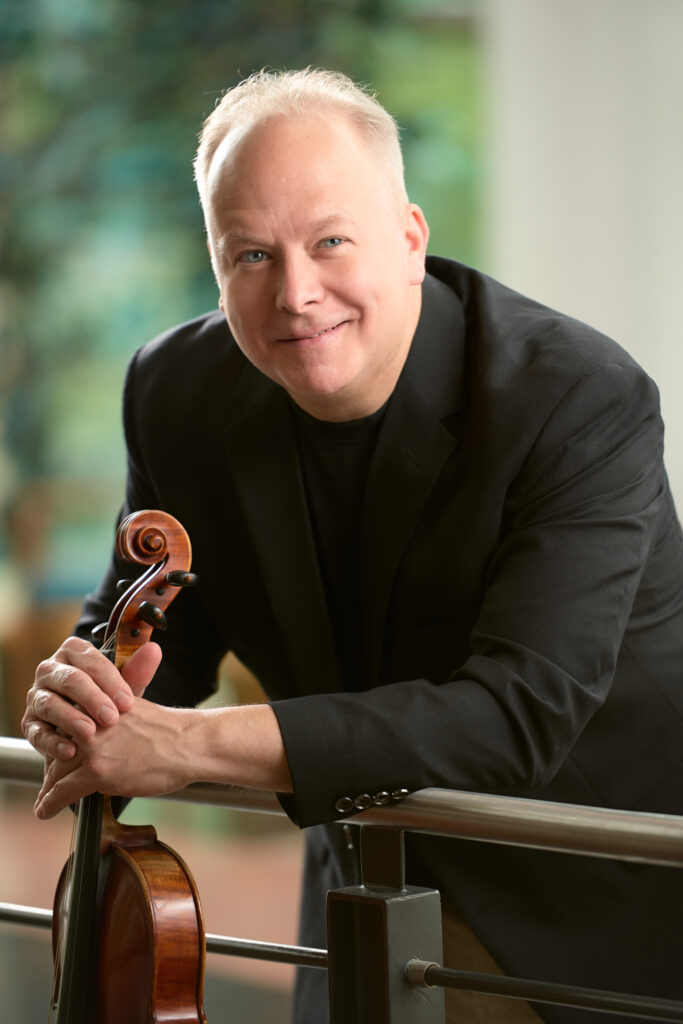
Dr. Scott Rawls

Violist Scott Rawls has appeared as soloist and chamber musician throughout the United States, Canada, Mexico, Japan, and Europe.  Recent chamber music endeavors include performances with Dmitry Sitkovetsky, Branford Marsalis, Sergey Antonov, Michelle Cann and the Reynolda Quartet.  With the Nikkanen/Rawls/Bailey string trio, he has played tours in Alaska, Washington, Arizona and Texas.  His solo and chamber music recordings can be heard on the Centaur, CRI, Nonesuch, Capstone, and Philips labels.  

A strong proponent of new music, Rawls has premiered dozens of new works by prominent composers.  Most notable, he has toured extensively as a member of Steve Reich and Musicians.  As the violist in this ensemble, he performed the numerous premieres of Daniel VariationsThe Cave and Three Tales by Steve Reich and Beryl Korot, videographer. And under the auspices of presenting organizations such as the Wiener Festwochen, Festival d’Automne a Paris, Holland Festival, Berlin Festival, Spoleto Festival USA and the Lincoln Center Festival, he has performed in major music centers around the world including London, Vienna, Rome, Milan, Tokyo, Prague, Amsterdam, Brussels, Los Angeles, Chicago and New York.   

Under the baton of maestro Christopher Dragon, he plays principal viola in the Greensboro Symphony Orchestra.  During the summer season, Rawls plays principal in the festival orchestra at Brevard Music Center where he also coordinates the viola program.  He was also appointed principal viola of the Palm Beach Opera orchestra, David Stern artistic director. 

Dr. Rawls currently serves as Marion Stedman Covington Distinguished Professor of Viola and Chamber Music and String Area Chair at The University of North Carolina at Greensboro. He holds a BM degree from Indiana University and a MM and DMA from State University of New York at Stony Brook. His major mentors include Abraham Skernick, Georges Janzer, John Graham and Julius Levine.  

Mark Engebretson

Composer Mark Engebretson is Professor of Composition and Music Technology at the University of North Carolina at Greensboro.  He is the recipient of a Barlow Commission (for Bent Frequency), North Carolina Artist Fellowship in Composition (for the Concerto for Soprano Saxophone and Orchestra), a Fulbright Fellowship for studies in France, and has received commissions from Harvard University’s Fromm Music Foundation (Acrylic Waves), the University of Wisconsin-Madison (They Said: sinister resonance), the Thomas S. Kenan Center for the Arts (Deliriade), and the Chicago College for the Performing Arts (Crossfade). He is the founder of New Music Greensboro. 

Engebretson’s creative work is driven by melody, timbre, virtuosity, clear and balanced formal structure, the integration of new media, multiple levels of associations, and a desire for fresh, engaging musical expression. Recent work has included strong overtones of pop music, creative intersections with written texts and using audience members’ smartphones as a form of interactivity. 

Mark Engebretson taught composition at the University of Florida, music theory at the SUNY Fredonia and 20th-century music history at the Eastman School of Music. He studied at the University of Minnesota (graduating Summa cum Laude), the Conservatoire de Bordeaux (as a Fulbright Scholar), and Northwestern University, where he received the Doctor of Music degree.  At Northwestern he studied composition with M. William Karlins, Pauline Oliveros, Marta Ptaszynska, Michael Pisaro, Stephen Syverud and Jay Alan Yim and saxophone with Frederick Hemke. His teachers in France were Michel Fuste-Lambezat and Jean-Marie Londeix. 
The vibrant UNCG Orchestra program has long been recognized for performance excellence, adventurous programming, and high artistic standards. A diversity of offerings allow students the opportunity to perform repertoire for ensembles ranging from the largest cornerstone and contemporary works for full orchestra, to intimate pieces for chamber orchestra, to string orchestra.

Students in the UNCG Orchestra program are dedicated to the performance, study and cultivation of orchestral music of the highest quality. The UNCG Orchestras offer outstanding performances throughout the year and enhance the institutional spirit and community of UNCG. We seek to promote music education in the state of North Carolina and in our region by supporting secondary school orchestra programs and other organizations through our outreach activities and other annual events on campus.

Event Details


The importance of philanthropy has never been greater. Please consider a gift to the School of Music to support our mission and ensure the future of music at UNCG.

408 Tate Street
Greensboro, NC 27412 United States
+ Google Map
View Venue Website