

Why Choose the UNCG School of Music?
The UNCG School of Music can help transform your passion into your profession through distinctive degree pathways. Each program blends intensive, rigorous training with hands‑on experiences that spark creativity and prepare you for a wide range of careers in the arts and beyond.
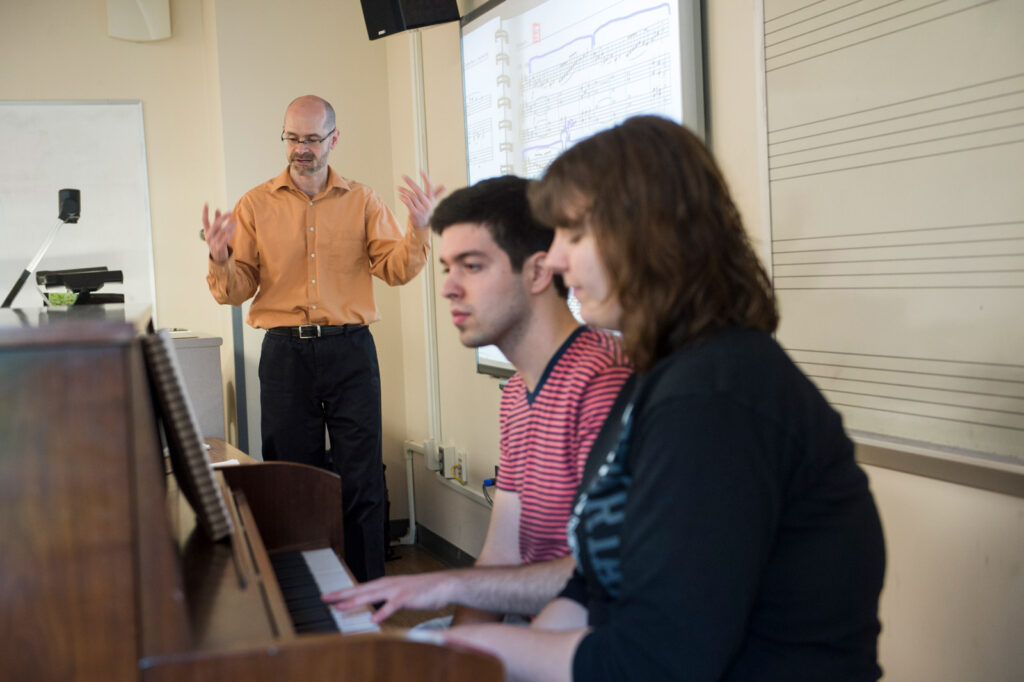
Conservatory-Quality Training in the Studio and Cutting Edge Scholarship in the Classroom
Our curriculum is designed to help you reach your highest potential. Through an individualized and supportive approach, you will build the technique, imagination, and skills needed to thrive in professional careers in music and related fields. Our high-level performance training, paired with a rich university general education curriculum, engages you fully as both an artist and a citizen.

Career Possibilities
Our Music Education graduates enjoy a 100% job placement rate. Our performance alumni have earned distinguished honors—including the Pulitzer Prize in Music, GRAMMY® Awards, and MacArthur “Genius” Grants—and maintain international careers in opera houses, major symphony orchestras, and military bands around the world. UNC Greensboro alumni also serve as faculty and administrators at leading music schools and arts organizations nationwide. In fact, most college music programs in North Carolina have at least one UNC Greensboro graduate on their faculty.
National in Scope. Local in Cost.
At UNC Greensboro, you can study with world‑class performers and scholars for a fraction of the cost of many peer music schools nationwide. We are recognized as one of the best‑value music programs in the country—not just in North Carolina—and are designated a Program of Excellence by the State of North Carolina. Our nationally recognized programs in both Music Education and Performance offer exceptional training and opportunities.
Our ensembles have appeared at state, regional, and national conventions of the College Band Directors National Association, the Music Educators National Conference, the North Carolina Music Educators Association, and the American Choral Directors Association. UNCG student ensembles have also released dozens of commercial recordings, showcasing the high level of artistry and professionalism our students achieve.
Facilities
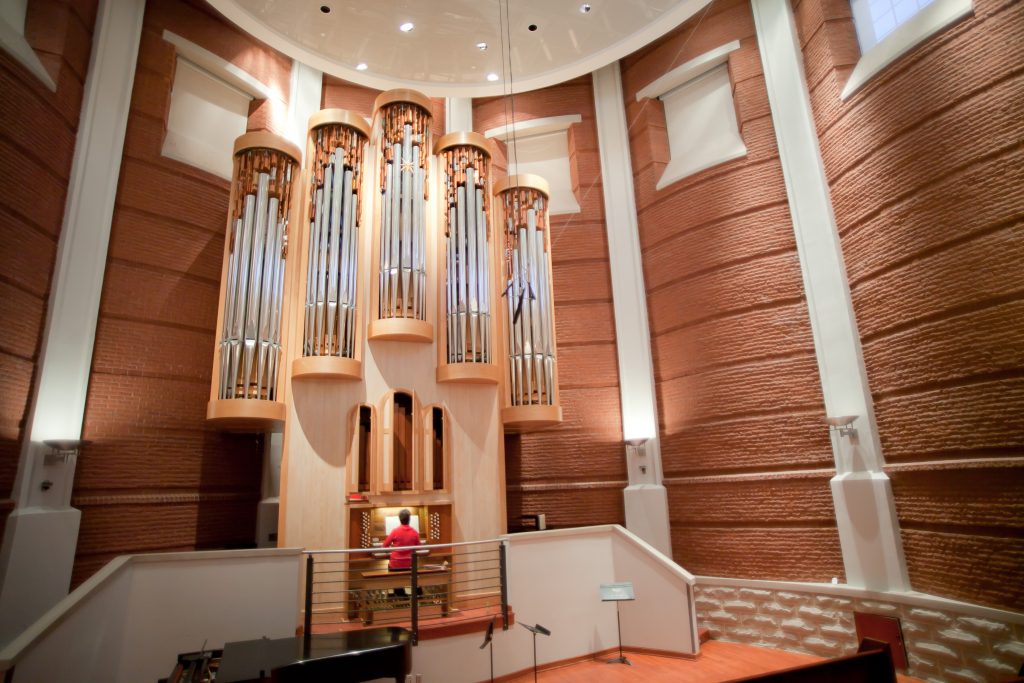
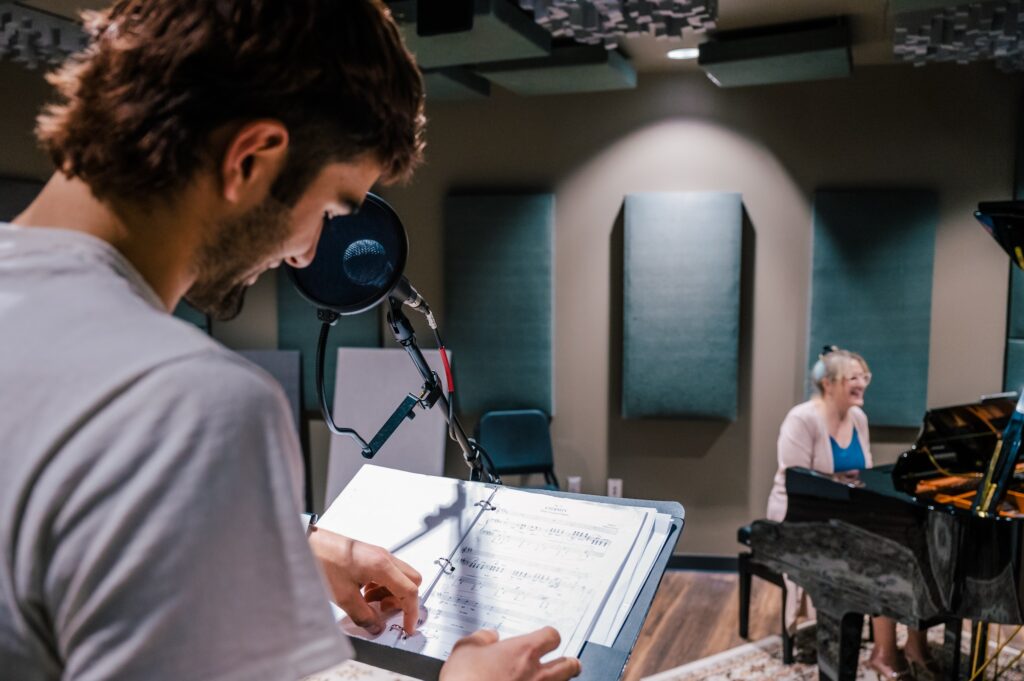

At 130,000 square feet, the UNC Greensboro School of Music is one of the finest music facilities in the nation and one of the largest academic buildings on our campus. Our three‑story structure includes the Harold Schiffman Music Library, the 350‑seat Tew Recital Hall, the 125‑seat Organ Hall, spacious rehearsal halls, classrooms, studios, practice rooms, a computer lab, electronic music studios, three practice rooms with virtual acoustical enhancement, and a fully equipped recording studio. Many of our performances are presented in the historic UNCG Auditorium—a beautifully preserved campus landmark that recently underwent a $19 million renovation.
Performance Opportunities
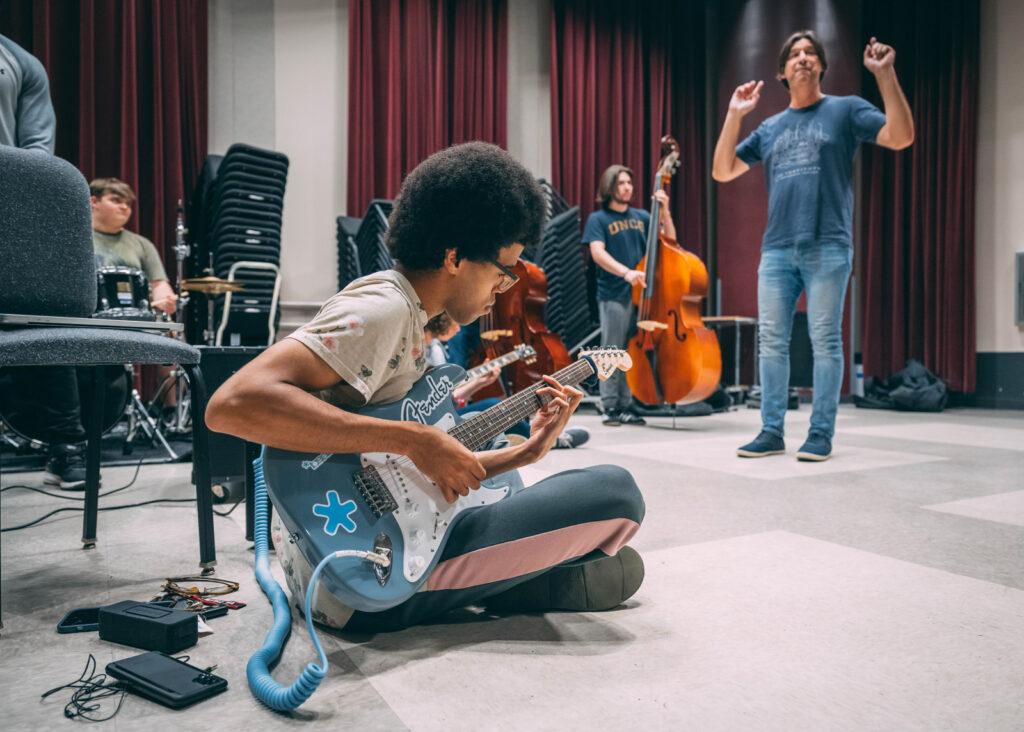
Performance opportunities abound at UNC Greensboro, with options ranging from small chamber ensembles to large bands, orchestras, choirs, jazz ensembles, opera companies, and global music groups. Our ensembles regularly tour and have performed in distinguished venues such as The Kennedy Center in Washington, D.C., Lincoln Center in New York City, and Dvořák Hall in Prague, Czech Republic—just to name a few.
Community Engagement
From your first steps on campus, you’ll be welcomed into a vibrant community of student‑musicians and scholars. Collaborative opportunities abound—especially in Studio 91, our interdisciplinary arts residence hall, where you can create and explore alongside artists from across campus.
Academic enrichment includes the Honors in Music program, extensive K–12 field experiences, and numerous community outreach projects. You’ll also find international opportunities through study‑abroad programs and performance tours with our large ensembles.
Internships
Internships and field placements with local arts organizations and K–12 schools are required in many of our degree programs, giving students hands‑on experience that directly connects classroom learning with professional practice. Participation in regional and national pre‑professional organizations and festivals is also strongly encouraged, helping students build valuable networks and gain early exposure to the professional world.
Scholarships
Undergraduate students who audition and are accepted are considered for music scholarships. Graduate students who are admitted to the School of Music are considered for music scholarships, assistantships, and fellowships.