

Irna Priore Music and Culture Lecture Series
All Lectures are Free and Open to the Public
Fall 2025

Neil Lerner
J. Estes Millner Professor of Music
Chair of Film, Media, and Digital Studies
Davidson College
Friday, October 31, 2025, 4pm
“A Preliminary Canon of Pinball Music (in a Post-Canonic World)”
UNCG, Music Building, Room 221
For roughly two decades, scholars have been researching, writing, discussing, and teaching about music in video games. A recent RILM search for the phrase “video game” yielded nearly 1200 hits, but a search for “pinball” brings a mere 12, only one of which is an essay focusing on music in pinball machines. Pinball music is then an almost entirely unstudied phenomenon, despite the foundational role pinball played as an industry for the emergence of the video game industry in the 1970s. Amidst this torrent of dissertations, journal articles, monographs, and essay collections about video game music, the still-young field has recently and usefully questioned the utility and drawbacks of the canon of video game music that has emerged.
A preliminary canon of pinball music risks repeating some of a canon’s elitist and exclusionary impacts; yet for such an unknown and unstudied topic, a canon may provide benefits by offering potentially illuminating exemplars. Karen Cook’s recent 2020 questioning of video game music canons poses five categories by which a ludomusicological canon might be configured: through a focus on composers, particular musical works, consoles/systems, eras, and technological capabilities/constraints. Using that framework, together with research grounded in archival materials from pinball companies, patent records, industry periodicals, as well as composer interviews and recordings of the games themselves, this presentation will propose a preliminary canon by providing a brief historical overview of sound and music in pinball machines, and then will focus on some of the most aesthetically and thematically innovative game soundtracks. In so doing, this talk will bring recognition and attention to the work of groundbreaking composers such as Suzanne Ciani, Brian Schmidt, Chris Granner, and Dave Zabriskie.

Amy Zigler
Assistant Professor of Musicology
University of North Carolina at Greensboro
Thursday, November 20, 2025, 4pm
“‘Love has the Victory!’: Musical Representations of the Female Power in Ethel Smyth’s Der Wald”
UNCG, Music Building, Room 221
“There is a certain amount of fighting for the ‘Wald’ which I feel I must do—I want women to turn their minds to big and difficult jobs.” With this quote, scholars have been inspired to examine the libretto of Der Wald for evidence of Smyth’s proto-feminist tendencies. The music of Ethel Smyth’s second opera, however, has been less investigated in part due to a limited number of performances, difficulty accessing the score, and, until recently, no commercial recording.
In 1902–1904, the opera received performances in Berlin, London, at the Met in New York, and in Strasbourg, but it was not staged again until 2021. Consequently, scholarship has focused on the libretto and the vocal score, examining gender representation and power dynamics through the text, with limited exploration of how the music conveys the narrative. With the release of a commercial recording in 2023, however, it is now possible to hear the work multiple times as well as study the score, creating an opportunity to examine the ways in which the music of the opera conveys the narrative and depicts the characters.
At its core, Der Wald is a battle between two women for the love of a man. While this battle is most assuredly conveyed through the text and stage action, it is also conveyed through the music of the main female characters. Building upon the work of Wood, Lebiez, Gibbon, Kertesz, and Thomson, and through an examination of the full score and the recording within the context of the libretto and the correspondence between Smyth and her librettist Henry Brewster, this presentation will explore the ways in which Smyth expressed through music the power of her female characters.
Spring 2025

Anna Gatdula
Assistant Professor of Music
UNC Chapel Hill
Friday, February 21, 2025, 4pm
“Listening for the Voiceless: Musical Representation and Historical Subjectivity in Hosokawa’s Voiceless Voice in Hiroshima”
UNCG, Music Building, Room 235
This paper examines Toshio Hosokawa’s Voiceless Voice in Hiroshima (1989, 2001) as a sonic archive that opens inquiry into the contradictory nature of historical matter: the subjects and objects of history, the perpetrators and victims of trauma. Through close analysis of the composition’s musical techniques and textual elements, alongside consideration of Kitaro Nishida’s philosophy, voice and trauma studies, and comparative historiographies of post-War Europe and Japan, the paper argues that Hosokawa’s work challenges Western paradigms of historical subjectivity. The study traces how Hosokawa’s piece evolved over its compositional life, reflecting shifting understandings of Hiroshima’s place in post-War global and Japanese memory. By incorporating texts from Holocaust survivor Paul Celan, Hosokawa creates a transpacific dialogue that both connects and distinguishes these two pivotal 20th-century events.
The paper critically examines the notion of “voicelessness” in relation to hibakusha (atomic bomb survivors), considering tensions between silence and testimony, individual and collective memory, and the politics of victimhood and reparation. Whose voice is voiceless? The victims, the perpetrators, the traumatized? Furthermore, what is a priori in the act of identifying and identifying with historical voices? I argue that Hosokawa’s work, informed by Nishida’s philosophy, offers an alternative ontology to Western subject-object distinctions. Following David Eng (2022), the paper begins to theorize historical redress outside paradigms of sovereignty altogether. Ultimately, this analysis of Voiceless Voice in Hiroshima contributes to ongoing discourse about the role of art in mediating historical memory and the politics of representation.)

Allison Wente
Associate Professor of Music
Elon University
Thursday, April 10, 2025, 2:30pm
“Reviving the Ghost in the Machine: The Steinway Spirio and the New Era of Mechanical Performance”
UNCG, Music Building, Room 221
In 2016, Steinway premiered the Spirio, billing it as “the world’s finest high resolution player piano.” Steinway’s Spirio represents a new chapter in the history of mechanical music, one focused on the luxury of experiencing a pianist’s performance without the presence of the performer. The Spirio continues a lineage stretching back to Edwin Scott Votey’s 1896 Pianola and later to the reproducing piano. Writing about the reproducing piano, Arthur W. J. G. Ord-Hume claims it is “simply a player-piano wherein the last vestiges of human control are mechanically performed. It is an instrument which may be switched on and left to play a roll of music, with the self-same certainty of the resulting interpretation as we have today [1970] when we switch on a record player.” While this is not entirely accurate in describing the reproducing piano, the Spirio may finally realize this vision.
Although the player piano fell out of favor in the 1930s, the Spirio revives this lost tradition by positioning itself not as a competitor to recorded music, but as a luxury instrument capable of reproducing live artistry with remarkable fidelity. Because it is relatively new, it has received little scholarly attention thus far. Literature by Loughridge, Katz, and Taylor examines technology’s role in shaping musical labor, but the implications of the Spirio for performance culture remain unexamined.
This paper situates the Spirio within the history of mechanical pianos, exploring how Steinway positions it as an authentic performance reproduction, reviving debates on musical labor, the ontology of the “work,” and mechanical virtuosity. With the advent of Spirio technology, the highest symbol of prestige is no longer attending a great pianist’s concert, but rather owning that concert, performed faithfully by the ghostly in-home robot. Spirio performances even include pianists long dead, such as Rubinstein and Hess, to name just two. By eliminating the visual and material presence of the performer
while preserving their artistry, the Spirio raises new questions about what it means to listen, to perform, and to experience music in the twenty-first century.
Fall 2024

Deonte Harris
Assistant Professor of Ethnomusicology
UNC Chapel Hill
Friday, October 4, 2024
“London’s Caribbean Carnival Arts Scene and the Cultural Politics of Value, Race, and Diaspora.”
UNCG, Music Building, Room 217
London’s Notting Hill Carnival (NHC) is an annual street celebration that showcases Caribbean art, culture, and musics to the British and international public. Due to its immense popularity and growing significance, the London Development Agency conducted a study in 2003 on the economic impact of NHC which reported that carnival plays a key role in “enhancing London’s international tourism offer,” while generating close to £93M annually. Twenty years later, a new 2024 study commissioned by The Voice reported that the economic value of NHC is now nearly £400M. While these findings are significant, the emphasis of both studies on the economy of NHC hides as much as it reveals. This top-down, market framing of carnival obscures the fact that NHC is a mostly volunteer-managed event and the primary cultural producers of NHC (i.e., Black Britons of Caribbean heritage) are not the principal financial beneficiaries of the monies that the carnival generates. Despite this, Black carnivalists nonetheless consistently invest their time, energy, and resources into the making of carnival every year. Since money is not the central motivating factor stipulating their participation and engagement, my research strives to know what is it about carnival and carnival arts specifically that drive their participation year-in and year-out? And what might investigations of the historical entanglements of culture, power, and race in the lives of Black British carnivalists reveal about their unique relationship to, and investments in, the NHC that extends beyond economic determinism?
Spring 2024

Daniel Castro Pantoja
Assistant Professor of Musicology
UNC Greensboro School of Music
Friday, March 22, 2024, 4pm
“What in the W$@!% is Global Music History?: Global Intimacy, the Non-global, and Globally-Oriented Music Historiographies”
UNCG, Music Building, Room 217
What is the global? Where and when does the global begin and end? How do music and sound allow music scholars today to imagine the world as a whole? Inspired by Stuart Hall’s 1996, “When was the Post-Colonial? Thinking at the Limit,” in this talk, I propose two concepts to think at the limit of “the global” in global music history research: the non-global and global intimacy. The first half of the talk engages the concept of the “global” when it is used to signify a totality that contains musical and sonic movement through which large-scale spatialities and temporalities become interconnected. I suggest that centering the “non global” (that which the global excludes) in music history can potentially avoid what Sebastian Conrad calls global history’s obsession with mobility and interconnectivity. The second half of the talk addresses the global through the concept of intimacy, which I argue can serve as tool for music historians to grasp the limits of the global while bringing conversations about political affect to the fore in global music history and global musicology.

Noriko Manabe
Professor of Music
Indiana University Bloomington
Friday, April 19, 2024, 4pm
“Intertextuality in Protest Music”
UNCG, Music Building, Room 217
Music in protests regularly recalls pre-existing music, text, and symbols; such references capture attention, resonate with historical memory, enhance participation, and allow for allusive expression in oppressive circumstances. This talk considers the ways in which intertextuality in protest music manifests itself and serves social movements. Extending classifications from Genette and Lacasse, it posits a typology of intertextuality used in protest music—including covers, contrafacta, hip-hop remakes, remixes, allegories, metaphors, genre adaptation, paratext, and metatext—and considers how these techniques convey political messages, often by combining them with contemporary indexes or exploiting intertextual gaps (cf. Bauman and Briggs). The type of intertextuality that artists choose and the way it is received can vary depending on the method of censorship, copyright regimes, stage of the protest cycle, venue of the performance, and status of the artist. Drawing examples from the essays in the forthcoming Oxford Handbook of Protest Music (co-edited with Eric Drott) and the author’s own research in Japan and elsewhere, the essay shows the ubiquity of intertextuality in protest music, how it differs in various countries, and how it can communicate political points or misfire.
Fall 2023
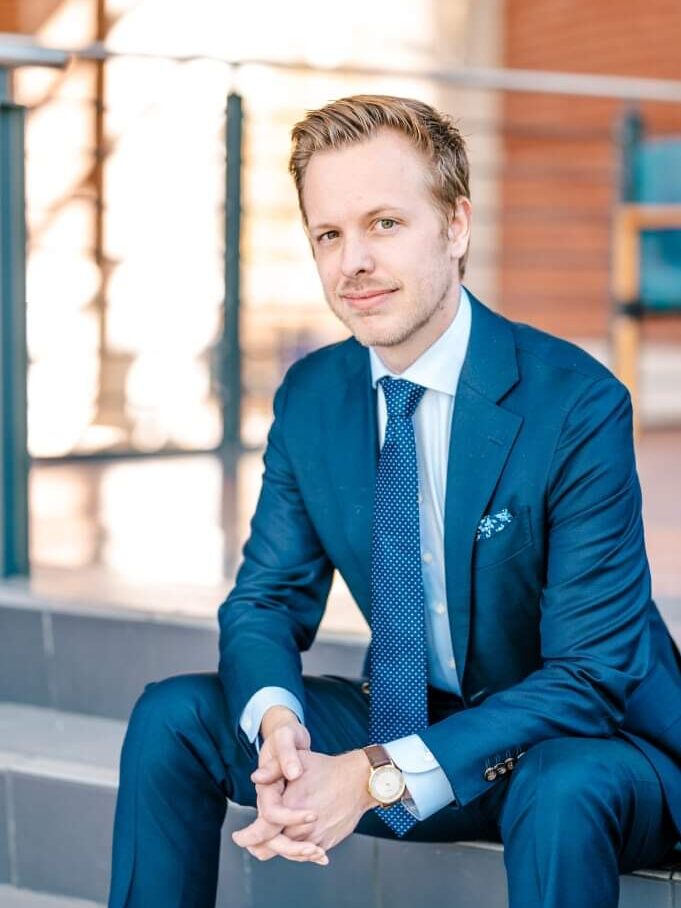
NATHANIEL MITCHELL
Lecturer of Music Theory
UNC Greensboro School of Music
Friday, September 22, 2023, 4pm
“Elements of Soneo Theory: Vocal Improvisation Strategies in Salsa Music”
UNCG, Music Building, Room 217
Salsa music’s soneos are improvisatory spaces in which lead singers (soneros) perform impressive feats of vocal pyrotechnics in cyclic alteration with a choral refrain. This paper develops a set of tools for interpreting soneos, inviting analysts to examine the sung stories of salsa music as a multivalent tapestry woven of sound, language, and gesture. Centering venerated soneros like Benny Moré, Celia Cruz, and Ismael Rivera, I explore standard ways of manipulating vocal styles, melodic shapes, rhythmic gestures, and ensemble relationships on the fly during a soneo improvisation. These techniques combine with the cyclic repetition schemes and linear intensification processes scripted by the arrangement, giving rise to unique energetic shapes that an analyst may then bring into expressive dialogue with the song’s gestural and linguistic media.
Spring 2023

KAREN MESSINA
Lecturer of Music Theory
UNC Greensboro School of Music
Friday, January 27, 2023, 4pm
“Rescued from Obscurity: Classical Form and Diegetic Music in Puccini’s Operas”
UNCG, Music Building, Room 217
Despite his enduring popularity in opera houses around the world, Puccini’s academic respectability has only solidified in the twenty-first century. Even with a deluge of studies in the last decade, the Puccini problem remains: should he be regarded as a traditional or modern composer? In this presentation, I argue that when Puccini writes diegetic music – which is music
that exists within a portrayed world and is therefore heard by characters as music – he steps inside the drama itself, adopting the persona and producing the work of a composing character. These moments rationalize the presence of Classical phrase structures in Puccini’s otherwise Romantic idiom.
Three increasingly obscure examples of diegetic music illustrate this premise. First, “Ave, sera gentile” from Manon Lescaut (1893) systematically sheds all textual and musical diegetic markers in its nondiegetic repeat. Next, an explicit textual reference marks “Quando me’n vo’” from La bohème (1896) as diegetic despite textual features that typically align with nondiegetic music. Finally, “L’alba vindice appar” from Tosca (1900) relies upon creative interpretation of the passage as a war anthem to explain its emphatically sentential structure and resolve both musical and dramatic deficiencies raised by a nondiegetic reading. Together, these analyses alleviate three levels of obscurity: the presence and function of Classical form in late Romantic opera, the hidden diegetic status of the excerpts from La bohème and Tosca, and the extent of Puccini’s dedication to drama through his use of stylistic variability to convey the work of a fictional composer.

ANDREA F. BOHLMAN
Associate Professor of Music
UNC Chapel Hill
Friday, February 24, 2023, 4pm
“Hearing Lwów Out of War, 1939: Singing and the Limits of Sonic Evidence”
UNCG, Music Building, Room 217
This talk draws attention to a three-and-a-half-minute sound recording made December 1939 in Prenzlau, Germany. In detention at the POW barracks for Polish officers, Kazimierz Dziubek shared a song with two linguists who were collecting his voice in order to preserve the urban Polish dialect distinctive to the multiethnic city, Lwów. Two verses that were classified as speech were in fact a hit song from Polish cinema, “Only in Lwów” (Tylko we Lwowie, 1939) by the prolific composer Henryk Wars and his frequent lyricist-collaborator Emanuel Szlechter. Even though this recording has hardly been heard, it cues my attention to the lives of those invested in its circulation: the song’s Polish Jewish authors, the Polish Catholic dance instructor who sang it, and the Ukrainian linguist who pulled it from the archive, listened, and transcribed it in 1942. My analysis insists on a connection between wartime recording and the afterlives of Nazi genocide and German colonial expansion as I explore the recording’s connection to Hollywood as well as Canada’s state policy of multiculturalism (1971– ).
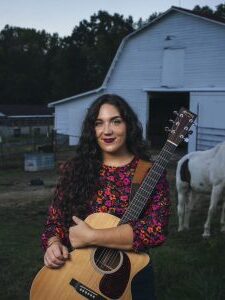
SOPHIA ENRÍQUEZ
Assistant Professor of Music
Duke University
Friday, March 31, 2023, 4pm
“The Fandango & the Nuevo South: Mapping Mexican Migration & a New Mountain Music”
UNCG, Music Building, Room 217
What Perla Guerrero identifies as the newest iteration of the “New South”, the framework of the Nuevo South reflects how Latinx communities continue to expand and transform the economic, political, and cultural landscape of U.S South. Yet there is still little work that seriously centers the music and celebratory practices of Latinx communities in the South as ways to understand this transformation. This talk asks: what does the Nuevo South sound like? What role do music, food, and dance practices play in animating Latinx communities in the U.S. South, and how do these practices help us make sense of the shifting regional politics of place, race, and migration? Drawing on scholarship of the Nuevo South from Latinx studies, ethnomusicology, and folklore studies, this talk explores the significance of the fandango—a community music celebration of the son jarocho folk tradition from Veracruz, Mexico—as a meaningful site of community building and transformation in the Nuevo South. Telling new stories of belonging while also gesturing toward a forgotten Mexican southern past, the fandango becomes a way for us to consider a new musical way of knowing in the South—of mountain music(s) as the critical connective tissue of migrant histories, routes, and futures.
Rescued from Obscurity Handout
Previous Seasons
Academic Year 2021-2022
CATRINA KIM
Assistant Professor of Music Theory
UNC Greensboro School of Music
Friday, September 24, 2021, 4pm
“Sonata o…: Fanny Hensel’s Sonata o Fantasia (1829) and String Quartet (1834)”
English-language musicological research on Fanny Hensel has proliferated since Marcia Citron first sought access to the composer’s manuscripts and letters at the Mendelssohn Archive in 1979 and since “Hensel research” became an established sub-topic under the umbrella of “Mendelssohn research” in the 1980s. North American music theorists have also begun publishing analytical studies within the last fifteen years (Malin 2010, Ng 2011, and Rodgers 2011a, 2011b, and 2018).
With one exception (Osborne 2021), these studies have focused primarily on the composer’s Lieder and short piano works. My talk addresses two chamber works by Hensel: the Sonata o Fantasia for piano and cello (1829) and the opening movement of Hensel’s only string quartet (1834). While neither work has received thorough treatment by Anglophone analysts, Annegret Huber analyzes both in German (1997 and 2001), and R. Larry Todd discusses these works in his biography of Hensel (2010). Huber also draws a connection between these two works and Hensel’s Sonata o Capriccio for solo piano, composed in 1824.
While the “sonata” principle in the earlier Sonata o Fantasia is explicit in its title, the opening movement of the string quartet lacks this titular evidence. I argue that there is compelling evidence of the sonata principle in this movement: in addition to the force of genre-based expectation and her longstanding interest in Beethoven’s late style, Hensel’s compositions from the years 1824–1834 demonstrate her longstanding engagement with classical sonata form alongside other formal genres.
KAILAN RUBINOFF
Associate Professor of Musicology
UNC Greensboro School of Music
Friday, November 19, 2021, 4pm
“The Early Music Vocality of Cathy Berberian”
This presentation explores the contributions of mezzo-soprano Cathy Berberian (1925–1983) to the historical performance movement. Berberian, an Armenian-American active in Italy, is renowned as a “pioneer of contemporary vocality” (Karantonis et al.), celebrated for her virtuosic interpretations of contemporary music, theatrical stage presence, and collaborations with leading European composers, chief among them her former husband Luciano Berio.
Berberian was at the height of her career during the 1960s and 1970s, a critical period for both the postwar avant-garde and the early music revival. While experimental composers abandoned serialism, turned to studio technologies, and employed unconventional notation and extended techniques to forge a new musical language, so too did historical performers reject conventional orchestras, instead adopting period instruments and examining historical sources. In Berberian, the early music and contemporary music scenes converged in one figure: she was at the nexus of a group of composers, performers and intellectuals whose work engaged extensively with the music of the past, e.g., through transcription, quotation, parody, rupture, dialogue or dialectic.
Berberian’s “historical” vocality was likewise groundbreaking: in performances of Purcell, Monteverdi and others, especially with conductor Nikolaus Harnoncourt, she presented fresh perspectives on early music. Her professionalism helped historical performance gain mainstream critical legitimacy, while her dramatic timing and textual sensitivity imbued Monteverdian characters with renewed vitality, distinguishing her readings from “straight” or romanticized interpretations. These performances were subtle in their radicalism: in early repertoire Berberian developed an alternative to bel canto singing that appealed to historical performers and avant-garde composers alike. Berberian’s career complicates twentieth-century music historiography, which has portrayed the historical performance movement as regressive (Adorno), or as reflecting Stravinskian rather than historical aesthetics (Taruskin). For performers, Berberian’s ultimate legacy was in establishing the contemporary/early music specialist as a viable profession, inspiring successive generations of musicians.
ANNA GAWBOY
Associate Professor of Music Theory
The Ohio State University, School of Music
Friday, February 25th, 2022, 4pm
“Esoteric Musical Modernism”
Twentieth century musical modernism is characterized by what Douglas Kahn has called a “sonic plenitude,” or a sheer abundance of new sounds. Composers created unique tonal systems, reimagined the relationships between consonance and dissonance, searched for unusual timbres and fresh means of resonance, sought transcultural synthesis by combining techniques from diverse global musics, and used technology to transform the sound wave itself. I consider the extent to which these innovations were motivated by Theosophy, a transcultural movement that synthesized Western esotericism with Indian spiritual traditions and popularized this synthesis for a modern global audience. Although Theosophy cannot be associated with one specific compositional style, orientalism and a belief in the metaphysical agency of sound emerged as central preoccupations associated with an esoteric musical aesthetic. The idea that music was an analogue for the divine energy of the universe stimulated composers’ imaginative ideation, enabling them to break away from inherited models and produce some of the most iconic musical innovations of the twentieth century. Theosophy’s emphasis on the transcendent power of vibration shaped modernist aesthetics across the arts, with a particularly profound impact on the development of abstract, non-figurative painting. Scholarly understanding of the impact of Theosophy on music has been largely confined to case studies, which reveal engagement on an individual level but do not show the breadth of Theosophy’s reach. This lecture provides a broad overview, suggesting that the influence of Theosophy and related esoteric currents on musical modernism has so far been dramatically underestimated.
ALEJANDRO MADRID
Professor and Chair
Cornell University, Department of Music
Friday, March 18, 2022, 4pm
“Mapping Out Traces of Performative Listening: Writing as Archival Constellation”
This lecture proposes a revision of nationalist Mexican music historiography that takes as point of departure a comparative analysis of two books published in 1930s Mexico City, Daniel Castañeda and Vicente T. Mendoza’s Instrumental precortesiano (1933) and Carlos Chávez’s Hacía una nueva música/Toward a New Music (1932–1937). Following on Ana María Ochoa Gautier’s work, this lecture provides an “acoustically tuned” analysis of these two books as archives of aspirations and desires within the context of a reconceptualization of the notion of musical and sound archives based on practices of listening and imagining. This archival constellation offers a window into understanding the performative relation between modernity and tradition that informs the postrevolutionary Mexican nationalist narrative. The lecture suggests that the counterpoint between the invention of the past and the imagination of the future that the writing of these two books puts in evidence is key in understanding the aspirational essentialism that has informed Mexican music historiography in the last ninety years.
NADIA CHANA
Assistant Professor of Ethnomusicology
University of Wisconsin-Madison, Mead Witter School of Music
Friday, April 1, 2022, 4pm
“Settler Publics, Ugly Feelings”
This talk unfolds from a performance in a concert hall on Musqueam territory in Vancouver, British Columbia: a collaboration between Inuk (singular of Inuit) singer Tanya Tagaq and Greenlandic mask dancer, Laakkuluk. This performance allows me to consider slippages between audiences and publics as well as the modes of address both come to expect in concert halls and related venues. Taking up those whom Tagaq call “some people”—“I find it a little ridiculous that some people can take a bite of hamburger from McDonald’s, but if they saw a dead cow on the ground, they’d go, ‘Ewww!’”—I engage with Tanya Tagaq both in her capacity as a performer and as a kind of literary critic: in performing for these implicitly settler publics, Tagaq reads them. I attempt to read these publics alongside her, suggesting that Tagaq has used over time the affordances of mainstream settler conceptions of Indigeneity (writ large) to produce what is at once legible enough to draw in settler audiences and yet increasingly viscerally unsettling for these audiences. I further suggest that “ugly feelings,” usually associated with minority positionings, are what creep up on and mark these audiences (Ngai 2005). Ultimately, I argue that thinking alongside Tanya Tagaq helps us rethink conventional notions of publics by bringing into view dominant settler publics: those publics that remain invisible to themselves as publics even as they exert considerable force in shaping concert halls and adjacent spheres.
JAZMIN GRAVES EYSSALLENNE
Assistant Professor
UNCG, African American and African Diasporic Studies
Friday April 22nd, 2022, 4pm
“Ancestral Voices: The Musical and Spiritual Technologies of Sidi Goma”
Sidis, Indian Muslims of African ancestry, living in the state of Gujarat in western India have navigated the interstices of marginal identities. Sidis have faced anti-black racism, the exoticization and exploitation of their musical performance tradition, and violent targeting based on their religious identity as Muslims. Nevertheless, Sidis’ reverence for their ancestral saints – African Sufis who settled in Gujarat in the fourteenth century – provides the foundation for resilience and the proud preservation of African cultural heritage. The Sidi Sufi devotional tradition centers upon the veneration of Bava Gor, Bava Habash, and Mai Misra, three African Rifai Sufi saints remembered as siblings, using musical instruments in ritual performance contexts that suggest East African origins. Building on the concepts of “ngoma consciousness” and its “spiritual technologies” as propounded by Nkosenathi Koela (University of Cape Town), this presentation examines the devotional song lyrics, musical instruments, and ritual practices of Sidi goma as they forge intergenerational links between Sidi ancestor-saints and ‘descendant’-devotees in western India. Sidi devotional songs, musical instruments and ritual practices are non-written mediums that have allowed for the perpetuation of East African linguistic elements, cultural forms, and healing modalities in western India over the centuries. At the same time, East African ngoma traditions have transformed in diaspora, becoming enrooted in the multivalent religio-cultural landscape of western India. This presentation surveys the preservation and transformation of East African musical and ritual forms in the Sidi Sufi devotional tradition of Gujarat.
ACADEMIC YEAR 2020–2021
JOAN TITUS
Associate Professor
Musicology/Ethnomusicology, UNCG
Friday, September 25, 2020, 4pm.
“Gender and Music in Dmitry Shostakovich’s Scores for Late Stalinist Films”
Sidis, Indian Muslims of African ancestry, living in the state of Gujarat in western India have navigated the interstices of marginal identities. Sidis have faced anti-black racism, the exoticization and exploitation of their musical performance tradition, and violent targeting based on their religious identity as Muslims. Nevertheless, Sidis’ reverence for their ancestral saints – African Sufis who settled in Gujarat in the fourteenth century – provides the foundation for resilience and the proud preservation of African cultural heritage. The Sidi Sufi devotional tradition centers upon the veneration of Bava Gor, Bava Habash, and Mai Misra, three African Rifai Sufi saints remembered as siblings, using musical instruments in ritual performance contexts that suggest East African origins. Building on the concepts of “ngoma consciousness” and its “spiritual technologies” as propounded by Nkosenathi Koela (University of Cape Town), this presentation examines the devotional song lyrics, musical instruments, and ritual practices of Sidi goma as they forge intergenerational links between Sidi ancestor-saints and ‘descendant’-devotees in western India. Sidi devotional songs, musical instruments and ritual practices are non-written mediums that have allowed for the perpetuation of East African linguistic elements, cultural forms, and healing modalities in western India over the centuries. At the same time, East African ngoma traditions have transformed in diaspora, becoming enrooted in the multivalent religio-cultural landscape of western India. This presentation surveys the preservation and transformation of East African musical and ritual forms in the Sidi Sufi devotional tradition of Gujarat.
JESSICA SWANSTON BAKER
Assistant Professor
Ethnomusicology, U. of Chicago
Friday, October 16, 2020, 4pm.
“Armed with Sound: Noisy Women and the Beginning of the West Indies Labor Movement”
Sidis, Indian Muslims of African ancestry, living in the state of Gujarat in western India have navigated the interstices of marginal identities. Sidis have faced anti-black racism, the exoticization and exploitation of their musical performance tradition, and violent targeting based on their religious identity as Muslims. Nevertheless, Sidis’ reverence for their ancestral saints – African Sufis who settled in Gujarat in the fourteenth century – provides the foundation for resilience and the proud preservation of African cultural heritage. The Sidi Sufi devotional tradition centers upon the veneration of Bava Gor, Bava Habash, and Mai Misra, three African Rifai Sufi saints remembered as siblings, using musical instruments in ritual performance contexts that suggest East African origins. Building on the concepts of “ngoma consciousness” and its “spiritual technologies” as propounded by Nkosenathi Koela (University of Cape Town), this presentation examines the devotional song lyrics, musical instruments, and ritual practices of Sidi goma as they forge intergenerational links between Sidi ancestor-saints and ‘descendant’-devotees in western India. Sidi devotional songs, musical instruments and ritual practices are non-written mediums that have allowed for the perpetuation of East African linguistic elements, cultural forms, and healing modalities in western India over the centuries. At the same time, East African ngoma traditions have transformed in diaspora, becoming enrooted in the multivalent religio-cultural landscape of western India. This presentation surveys the preservation and transformation of East African musical and ritual forms in the Sidi Sufi devotional tradition of Gujarat.
JULIE HUBBERT
Associate Professor
Musicology and Film/Media Studies, U. of South Carolina
Friday, January 22, 2021, 4pm.
“Barbra Streisand and Second Wave Feminism in New Hollywood Film”
Sidis, Indian Muslims of African ancestry, living in the state of Gujarat in western India have navigated the interstices of marginal identities. Sidis have faced anti-black racism, the exoticization and exploitation of their musical performance tradition, and violent targeting based on their religious identity as Muslims. Nevertheless, Sidis’ reverence for their ancestral saints – African Sufis who settled in Gujarat in the fourteenth century – provides the foundation for resilience and the proud preservation of African cultural heritage. The Sidi Sufi devotional tradition centers upon the veneration of Bava Gor, Bava Habash, and Mai Misra, three African Rifai Sufi saints remembered as siblings, using musical instruments in ritual performance contexts that suggest East African origins. Building on the concepts of “ngoma consciousness” and its “spiritual technologies” as propounded by Nkosenathi Koela (University of Cape Town), this presentation examines the devotional song lyrics, musical instruments, and ritual practices of Sidi goma as they forge intergenerational links between Sidi ancestor-saints and ‘descendant’-devotees in western India. Sidi devotional songs, musical instruments and ritual practices are non-written mediums that have allowed for the perpetuation of East African linguistic elements, cultural forms, and healing modalities in western India over the centuries. At the same time, East African ngoma traditions have transformed in diaspora, becoming enrooted in the multivalent religio-cultural landscape of western India. This presentation surveys the preservation and transformation of East African musical and ritual forms in the Sidi Sufi devotional tradition of Gujarat.
YAYOI UNO EVERETT
Professor
Music Theory, University of Illinois, Chicago
Friday, February 5, 2021, 4pm.
“Kaija Saariaho and Peter Sellars’s Only the Sound Remains (2016): Transcoding the Aesthetics of Noh Drama”
Sidis, Indian Muslims of African ancestry, living in the state of Gujarat in western India have navigated the interstices of marginal identities. Sidis have faced anti-black racism, the exoticization and exploitation of their musical performance tradition, and violent targeting based on their religious identity as Muslims. Nevertheless, Sidis’ reverence for their ancestral saints – African Sufis who settled in Gujarat in the fourteenth century – provides the foundation for resilience and the proud preservation of African cultural heritage. The Sidi Sufi devotional tradition centers upon the veneration of Bava Gor, Bava Habash, and Mai Misra, three African Rifai Sufi saints remembered as siblings, using musical instruments in ritual performance contexts that suggest East African origins. Building on the concepts of “ngoma consciousness” and its “spiritual technologies” as propounded by Nkosenathi Koela (University of Cape Town), this presentation examines the devotional song lyrics, musical instruments, and ritual practices of Sidi goma as they forge intergenerational links between Sidi ancestor-saints and ‘descendant’-devotees in western India. Sidi devotional songs, musical instruments and ritual practices are non-written mediums that have allowed for the perpetuation of East African linguistic elements, cultural forms, and healing modalities in western India over the centuries. At the same time, East African ngoma traditions have transformed in diaspora, becoming enrooted in the multivalent religio-cultural landscape of western India. This presentation surveys the preservation and transformation of East African musical and ritual forms in the Sidi Sufi devotional tradition of Gujarat.
JOCELYN NEAL
Bowman and Gordon Gray Distinguished Term Professor of Music
Music Theory, UNC Chapel Hill
Friday, February 26, 2021, 4pm.
“Singing Your Own Songs: How Female Songwriters Navigate Intellectual Property and Public Authenticity”
Sidis, Indian Muslims of African ancestry, living in the state of Gujarat in western India have navigated the interstices of marginal identities. Sidis have faced anti-black racism, the exoticization and exploitation of their musical performance tradition, and violent targeting based on their religious identity as Muslims. Nevertheless, Sidis’ reverence for their ancestral saints – African Sufis who settled in Gujarat in the fourteenth century – provides the foundation for resilience and the proud preservation of African cultural heritage. The Sidi Sufi devotional tradition centers upon the veneration of Bava Gor, Bava Habash, and Mai Misra, three African Rifai Sufi saints remembered as siblings, using musical instruments in ritual performance contexts that suggest East African origins. Building on the concepts of “ngoma consciousness” and its “spiritual technologies” as propounded by Nkosenathi Koela (University of Cape Town), this presentation examines the devotional song lyrics, musical instruments, and ritual practices of Sidi goma as they forge intergenerational links between Sidi ancestor-saints and ‘descendant’-devotees in western India. Sidi devotional songs, musical instruments and ritual practices are non-written mediums that have allowed for the perpetuation of East African linguistic elements, cultural forms, and healing modalities in western India over the centuries. At the same time, East African ngoma traditions have transformed in diaspora, becoming enrooted in the multivalent religio-cultural landscape of western India. This presentation surveys the preservation and transformation of East African musical and ritual forms in the Sidi Sufi devotional tradition of Gujarat.
YUN EMILY WANG
Assistant Professor
Ethnomusicology, Duke University (Starting Fall 2020)
Friday, March 26, 2021, 4pm.
“Sounding ‘Homes’ and Making Do in Sinophone Toronto”
Sidis, Indian Muslims of African ancestry, living in the state of Gujarat in western India have navigated the interstices of marginal identities. Sidis have faced anti-black racism, the exoticization and exploitation of their musical performance tradition, and violent targeting based on their religious identity as Muslims. Nevertheless, Sidis’ reverence for their ancestral saints – African Sufis who settled in Gujarat in the fourteenth century – provides the foundation for resilience and the proud preservation of African cultural heritage. The Sidi Sufi devotional tradition centers upon the veneration of Bava Gor, Bava Habash, and Mai Misra, three African Rifai Sufi saints remembered as siblings, using musical instruments in ritual performance contexts that suggest East African origins. Building on the concepts of “ngoma consciousness” and its “spiritual technologies” as propounded by Nkosenathi Koela (University of Cape Town), this presentation examines the devotional song lyrics, musical instruments, and ritual practices of Sidi goma as they forge intergenerational links between Sidi ancestor-saints and ‘descendant’-devotees in western India. Sidi devotional songs, musical instruments and ritual practices are non-written mediums that have allowed for the perpetuation of East African linguistic elements, cultural forms, and healing modalities in western India over the centuries. At the same time, East African ngoma traditions have transformed in diaspora, becoming enrooted in the multivalent religio-cultural landscape of western India. This presentation surveys the preservation and transformation of East African musical and ritual forms in the Sidi Sufi devotional tradition of Gujarat.
NINA EIDSHEIM
Professor
Musicology, UCLA
Friday, April 16, 2021, 4pm.
“Ime mean, I knewknow I’m was kinda tall for highasking: How we Teach Machines to Listen for (Certain) Accents to Reinforce Racism”
Sidis, Indian Muslims of African ancestry, living in the state of Gujarat in western India have navigated the interstices of marginal identities. Sidis have faced anti-black racism, the exoticization and exploitation of their musical performance tradition, and violent targeting based on their religious identity as Muslims. Nevertheless, Sidis’ reverence for their ancestral saints – African Sufis who settled in Gujarat in the fourteenth century – provides the foundation for resilience and the proud preservation of African cultural heritage. The Sidi Sufi devotional tradition centers upon the veneration of Bava Gor, Bava Habash, and Mai Misra, three African Rifai Sufi saints remembered as siblings, using musical instruments in ritual performance contexts that suggest East African origins. Building on the concepts of “ngoma consciousness” and its “spiritual technologies” as propounded by Nkosenathi Koela (University of Cape Town), this presentation examines the devotional song lyrics, musical instruments, and ritual practices of Sidi goma as they forge intergenerational links between Sidi ancestor-saints and ‘descendant’-devotees in western India. Sidi devotional songs, musical instruments and ritual practices are non-written mediums that have allowed for the perpetuation of East African linguistic elements, cultural forms, and healing modalities in western India over the centuries. At the same time, East African ngoma traditions have transformed in diaspora, becoming enrooted in the multivalent religio-cultural landscape of western India. This presentation surveys the preservation and transformation of East African musical and ritual forms in the Sidi Sufi devotional tradition of Gujarat.
Spring 2020
GREGORY CARROLL
Associate Professor
Music Theory and Musicology UNC Greensboro
Wednesday, February 19, 2020 – 4pm
UNCG Music Building Room 235
“My Recent Life in Octatonia”
DAVID AARONS
Assistant Professor
Ethnomusicology UNC Greensboro
Wednesday, March 11, 2020 – 4pm
UNCG Music Building Room 235
“From Jah Rastafari to Ras Tafari: The Glocalization of Reggae Music in Ethiopia through Negotiations of Proximity”
MARK J. BUTLER
Professor
Music Theory and Cognition Northwestern University
Friday, April 3, 2020 – 4pm.
UNCG Music Building. Cone Lecture Hall, Room 217
“Bodies, Instruments, Interfaces: Theorizing the Materialities of Performance in Electronic Dance Music”
Fall 2019
ACQUELINE AVILA
Associate Professor
University of Tennessee, School of Music
September 13, 2019 – 4pm
“The Sounds of Desire, Seduction, and Nostalgia: Musicalizing Femininity in cine mexicano (1936–1952)”
ELIZABETH KEATHLEY
Associate Professor
UNCG, Musicology and Ethnomusicology Area
October 18, 2019 – 4pm
“Voicing the Opposition: Lila Downs, El demagogo, and Balas y chocolate”
SARA SNYDER
Assistant Professor and Director of the Cherokee Language Program
Western Carolina University, Department of Anthropology and Sociology
November 15, 2019 – 4pm
“Sound, Sociality, and the Making of Mountain Skies”
Presented by the School of Music and the Music Studies Division
For more information contact the series coordinator via email at ipmcls@uncg.edu.

Irna Priore (1963–2014) was a beloved colleague, and associate professor of music theory in the UNCG School of Music. In addition to being a flutist, she was a scholar, teacher, and mentor in music studies, and contributed publications on Luciano Berio, Darmstadt, post-1945 theory, and Brazilian popular music. Her legacy of generosity, strength, and brilliance continues through her family, friends, colleagues, and students; this series is dedicated to her and celebrates her memory.