UNCG Symphony Orchestra
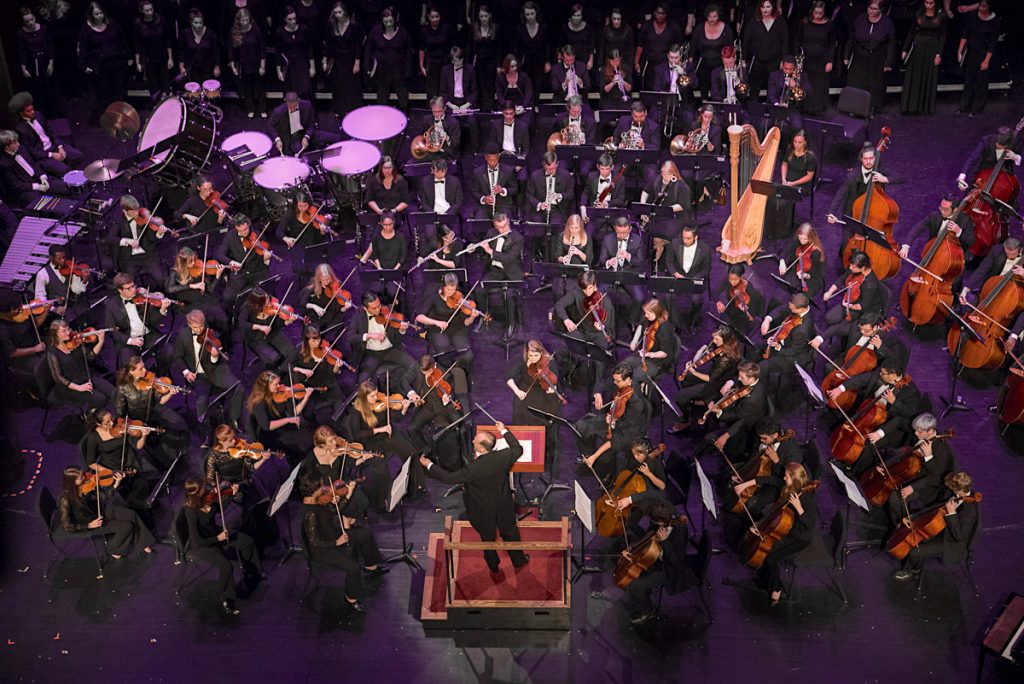
The UNCG Symphony Orchestra is one of the School of Music’s flagship ensembles—an elite group of about ninety musicians representing the top undergraduate, master’s, and doctoral performers in music performance and music education. Entry into the ensemble is highly competitive, with all members placed by audition. Our students regularly earn some of the field’s highest distinctions, including regional and national solo competition awards, music scholarships, teaching fellowships, graduate assistantships, and positions in prestigious honors ensembles.
The Symphony Orchestra is known for its bold performances and high artistic standards, appearing on stages throughout North Carolina and across the region. Recent highlights include performances at the Kennedy Center in Washington, DC, and the Stevens Center in Winston‑Salem, NC. The Classical Voice of North Carolina praised the ensemble for its “dramatic and incisive” playing and described a recent performance as “beautifully done.”
Each season, the Symphony Orchestra brings a dynamic range of projects to life. Alongside cornerstone orchestral repertoire, the ensemble collaborates annually with the UNCG choirs to present a major choral‑orchestral work and regularly features faculty artists and Student Artist Competition winners as soloists. Every spring, the Symphony partners with the School of Music Opera Theatre and the UNCG School of Theatre to stage a full opera production—one of the most exciting interdisciplinary traditions on campus.
Musicians from across the university are welcomed into the orchestra community, and string players who are not majoring in music are especially encouraged to audition and take part in this vibrant artistic experience.
Gate City Camerata
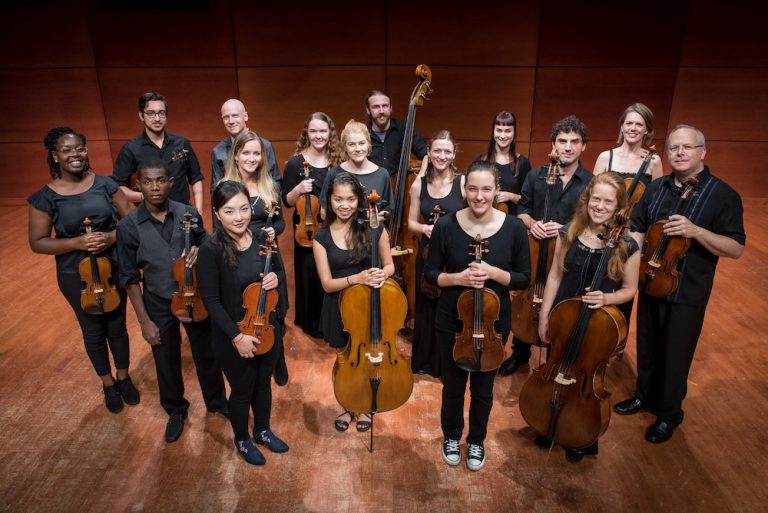
The Gate City Camerata is a unique ensemble composed of UNCG School of Music string faculty and selected string students. This chamber music experience affords students the opportunity to rehearse and perform with their faculty mentors – truly a rare learning experience. Since its inception nineteen years ago, this elite ensemble has performed throughout North Carolina and has accepted invitations to perform as featured guest ensemble at the North Carolina Music Teachers Association Convention and the North Carolina Music Educators Association Conference.
In recent seasons, the Gate City Camerata has enjoyed two distinguished guest artist collaborations – performing with violinist, Dmitry Sitkovetsky on his Sitkovetsky & Friends chamber music series and also with violinist, Nadja Salerno-Sonnenberg on the UNCG University Concert and Lecture Series. The ensemble has also performed concerts on chamber music series sponsored by the Wilmington Chamber Music Society, American Music Festival, Pamilco Musical Society, Bald Head Island, and Roanoke Island Festival Park. Through an educational outreach component arranged with three of these eastern NC venues, the Gate City Camerata performed for more than 2,000 elementary and middle school students. The ensemble typically performs without a conductor and has recently programmed works ranging from Bela Bartok’s Divertimento and Alfred Schnittke’s Concerto for Three to Mozart’s Divertimenti and Vivaldi’s Four Seasons.
Sinfonia

The Sinfonia is dedicated to broadening the artistic performance level of its members while presenting programs that encompass a wide range of styles, from Baroque, Classical, Romantic, and Modern eras. Faculty members are frequently featured as guest soloists, and the Sinfonia has performed several world premieres and collaborated with students from the UNCG Department of Dance on recent performances. For non-music majors, the Sinfonia provides a musical outlet while studying in another discipline. Membership is determined by audition for music majors, and additionally is open to talented university students who are preparing for life-long involvement in the arts without audition.
Casella Sinfonietta
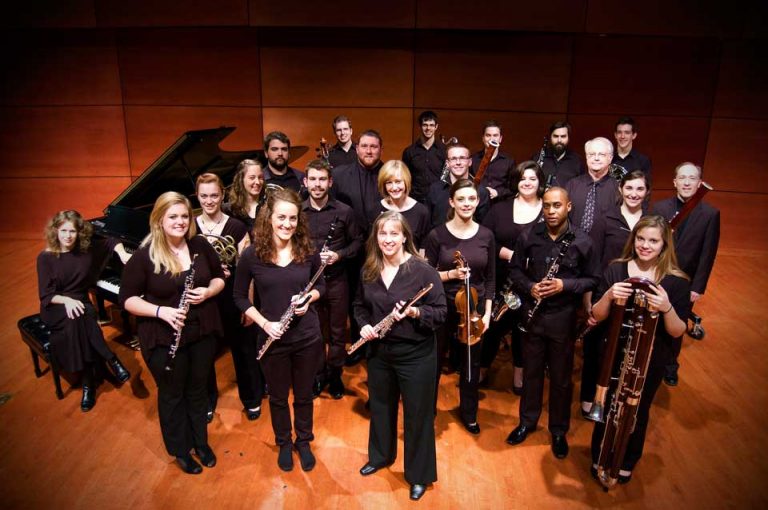
Casella Sinfonietta was created as an enhancement to the large ensemble offerings in the UNCG School of Music. Performing a range of works for 6 to 18 players, from the Renaissance period through world premieres, the ensemble functions on a professional model and performs one concert each semester. The personnel for each semester is determined by the repertoire, allowing the finest performers on wind, brass, string, percussion, and keyboard instruments the highest-level experience possible. Faculty and guest soloists and composers frequently collaborate with the ensemble.