Since its invention in the late nineteenth century, film has been intertwined with live performance, making it perhaps the most interdisciplinary of art forms. In the College of Visual and Performing Arts’ Schools of Dance and Theatre, the medium of film is a tool for artistic expression, teaching, and providing career preparedness.
Professor of Dance Robin Gee explains that film and dance are a natural fit:
“The notion that film and dance work well together makes sense because dance has always been a part of it. When we were developing the camera, filmmakers were using moving bodies to assess the efficacy of the medium. The Lumière brothers were shooting moving people, instead of shooting stagnant objects. There’s always been a moving body in relationship to the camera. Having it develop as an art form historically took some time, though.”
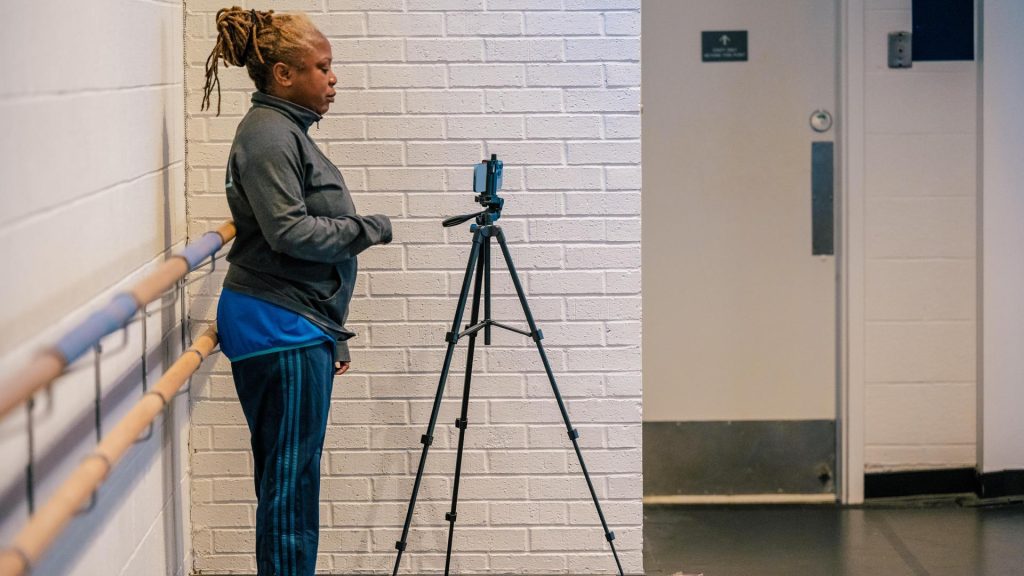
Gee specializes in African and modern dance techniques, digital media, and screen dance technologies. She has performed with such New York-based dance companies as Les Ballet Bagata, Ballets Africains de Guinée, and Marie Basse Wiles’s Maimouna Keita Dance Company with whom she toured extensively across the United States and Africa.
As she began exploring ways that film could serve in the conservation and preservation of ritual and historical African dance, Gee began to see dance filmmaking as more than documentation, but as its own kind of creative outcome.
Gee teaches a course in screen dance as part of the choreography track for dance majors:
“It’s very innovative. And now you see a lot of dance programs trying to do what we have been doing for the past ten years. We started out with technology as a kind of preservation and learning how to record your performances. Its developed into a new way of composing.
“The outcome is neither dance nor film, but a new creative work of art. It’s more than filming a live dance, it’s making a new piece of art that sits at that sweet spot between dance and film that borrows from technology to enhance composition and movement. I’m not going to just point my camera and try to recreate a live dance. That’s not dance filmmaking. Dance filmmaking finds a way to play with the best of both of those worlds and makes a hybrid new form.”
Gee is the founder of Sugarfoote Productions, a multidisciplinary arts organization dedicated to promoting African and African Diasporan cultural traditions through performance, education, and community engagement. She is also the co-producer of the Greensboro Dance Film Festival. Gee’s own dance films have been featured in over thirty-seven film festivals internationally:
“Screen dance allows students to explore things like what are some of the benefits of having a 360-degree perspective? How do you use the tools of repetition—the theme and variation of silhouettes in live choreography—in a filmic practice?
“Our students are making their own work, and they’re not just learning about making films, but how they think about performance and choreography and how to infuse their curriculum with this technology, because it is where we are now. These students are digital natives, and the camera is the new stage.”
Assistant Professor of Acting for the Camera David Furr agrees that bringing film into the theatre curriculum has been impactful:
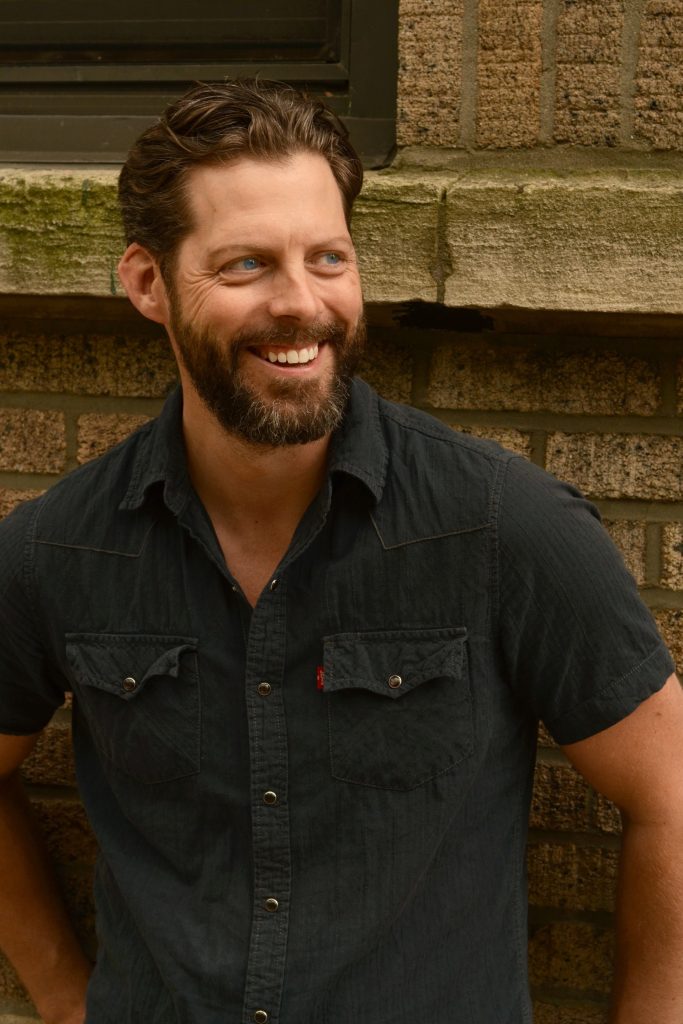
“Film and television are where so many of our students are going to begin their careers. We’re giving our students skills they can use in multiple ways—skills that work for both stage and screen. I did a lot of live theatre then I went into film, and I learned a lot of these lessons in film that I could take back to the theater. They feed each other naturally and you need both. So, we’re giving our students the tools to succeed in the whole industry, to have a diversified career.”
Furr is a Tony-, Drama Desk-, and SAG Award-nominated actor with over twenty-five years of professional experience across Broadway, Off Broadway, television, film, regional theatre, voiceover, and audiobook narration. One of Furr’s most recent roles was Dashiell Montgomery on HBO’s The Gilded Age:
“That’s one of the reasons they brought me on here at the School of Theatre. I’m coming from the professional side, and I’m still very much a working actor, so I can bring what I’m learning in the field right back to the students.
“My college training was classical theatre, and we didn’t have any on-camera classes—I knew that going in because it was Shakespeare classical theatre. But nowadays I think we owe it to students to give them the tools by which they can also make a living. It is responsible of us to say here’s another tool you can use to get paid.”
Recently, Furr was working on a feature film, A Long Winter, based on the novel by Colm Tóibín in the Canadiana Rockies. He used his camera to shoot video of various aspects of the set and the process, edited them, then sent them to his advanced Acting for the Camera class, creating a real-time, real-world experience:
“We had been discussing terminology and the different jobs associated with filmmaking. So, I went around pointing out things like the ‘honey wagon’ (restrooms) and ‘two-bangers’ (trailers with a dressing room on each side). This one is hair and makeup—don’t jump up these stairs because there are people doing precision makeup, and you don’t want to jostle them by bounding up the steps. I was able to use video as a tool to virtually bring my students on set with me—to bring the experience of being on a film set to them.
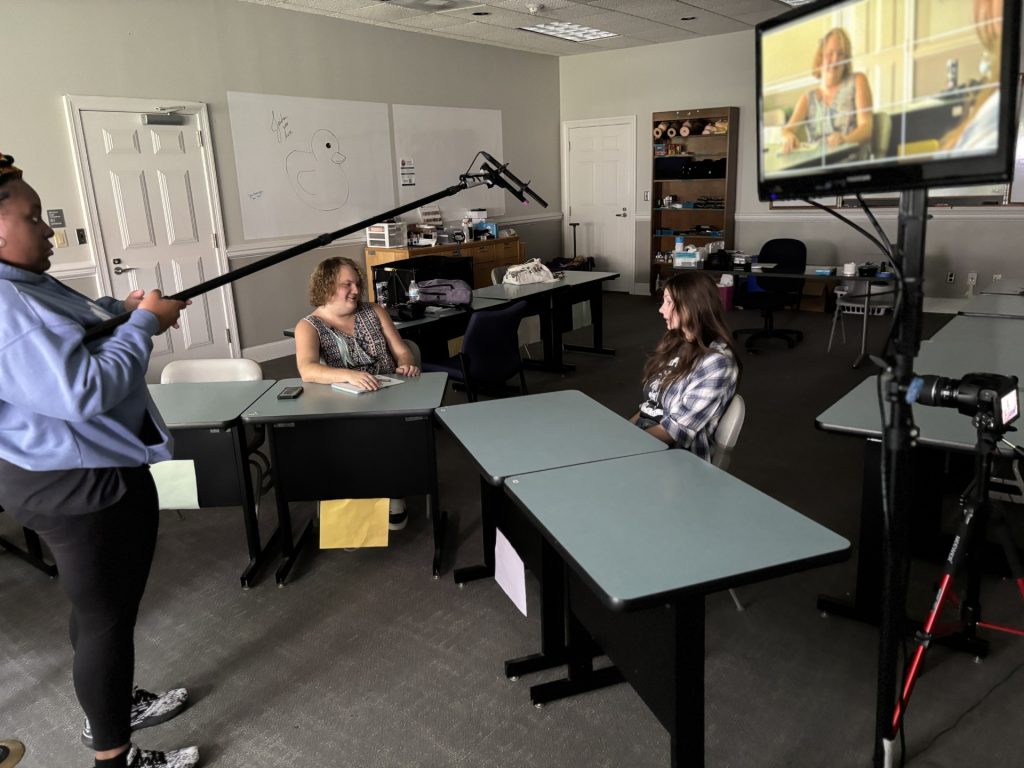
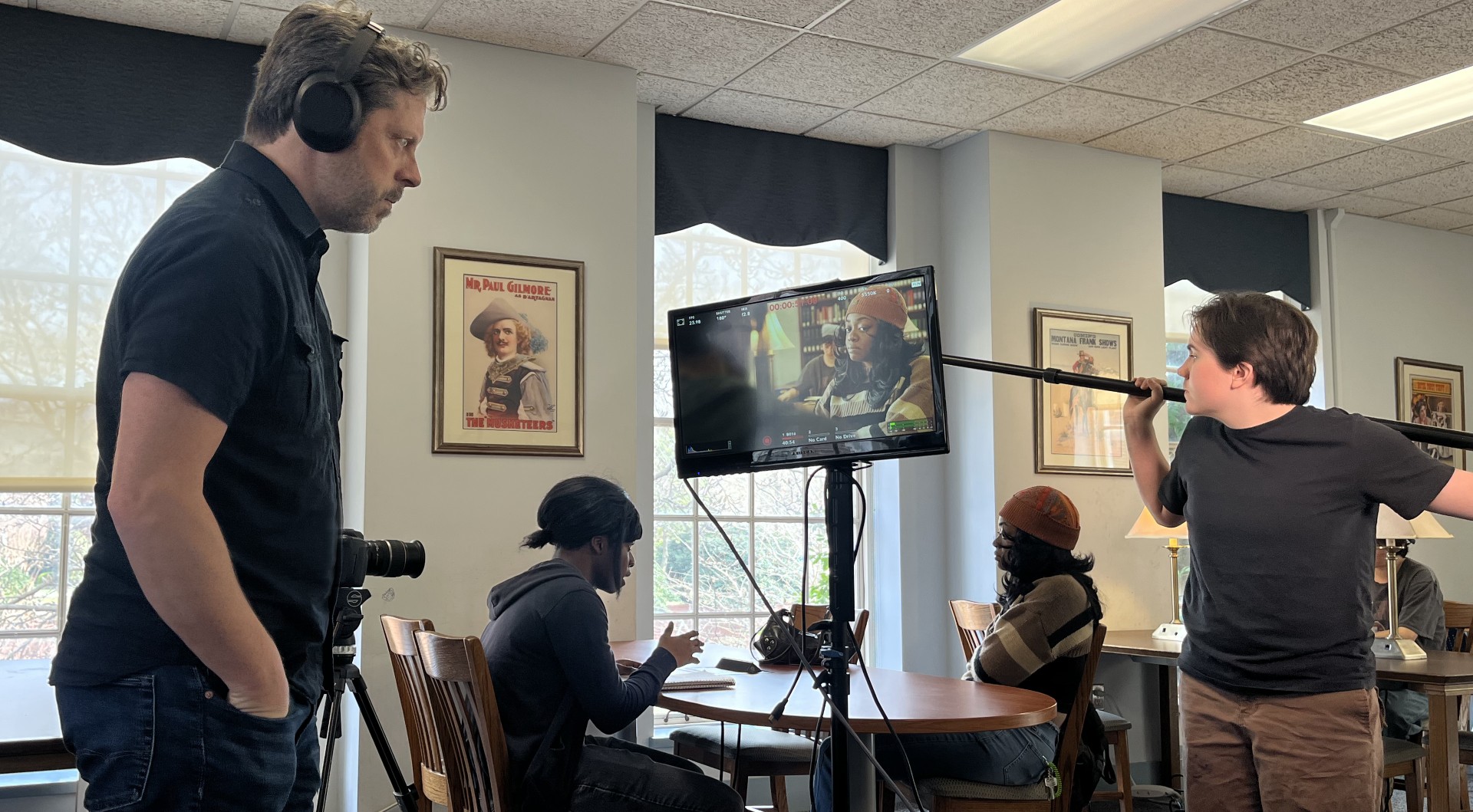
“I want students to be able to walk on set and know the rhythm of things and how things are structured. And there might be fifty people, you know, for every student who’s doing a crew job for us. When a student isn’t acting in a scene, they might be holding the boom mic. In class, that’s just one student while in real life that would be a whole department.”
Alongside his performance career, Furr has spent more than fifteen years coaching, mentoring, and conducting workshops for actors as they navigate the professional industry. He notes that video has had an increased impact on how actors audition, and his class aims to support students in that way, too:
“First auditions are almost all done by self-tape. I tell students not only do you need to be good at it, but you also need to be bold with it because that’s your calling card. In addition to acting for the camera skills, I also teach some basic editing. The students can polish their tape, and it saves them money to be able to do some of that themselves.”
BFA Seniors are also provided with a showcase opportunity which is currently electronic. Their scenes are written by New York playwright Ben Holbrook (’05 BFA Acting) and shot and directed by Los Angeles filmmaker Thomas Mendolia (’12 BFA Acting):
“We used to do live showcases, but now we do this amazing showcase reel which we just sent out to over two thousand agents and casting directors. We also set up an online showcase for students to meet agents via Zoom. And now these students have material to use for their own professional reels. That’s an amazing use of video in service to our students.”
As Furr and Gee have illustrated, video and film are not just instructional “extras” in the Schools of Dance and Theatre. Bringing the medium into the curriculum has helped reframe how students create, learn, and prepare for careers in their fields, by providing an intersection between live performance and the limitless possibilities of the camera.
Story by Terri W Relos