From playing the piano to painting to pirouettes, UNCG’s College of Visual and Performing Arts opens its doors each summer to youths and adults for camps and arts intensives.
This year, the School of Music will host the 43rd annual Summer Music Camp, the largest university music camp in the United States. The School of Art will offer the 13th annual Summer Arts and Design Intensive, and the School of Dance will invite educators to attend a three-day Jazz Dance Workshop led by a visiting Uprooted Educational Team. For anyone interested in taking part in any of these summer experiences, application time is this month!
Summer Music Camp: Based on Excellence and Access
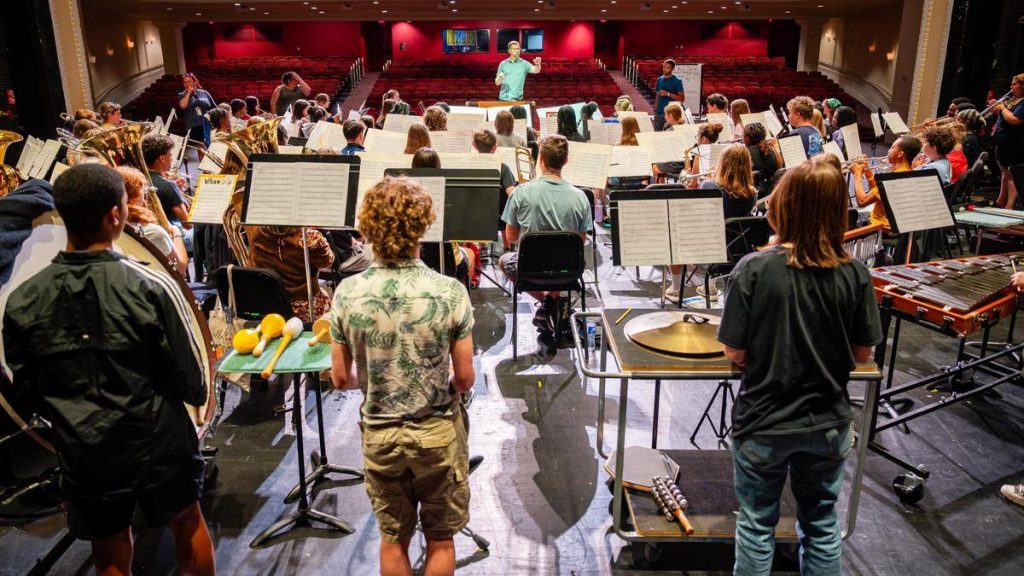
Summer Music Camp offers two one-week sessions with programs in band, chorus, orchestra, and piano and serves over sixteen hundred middle and high school students under the guidance of the artist faculty of the UNCG School of Music, long recognized as a national leader in musical excellence.
Brad McMillan, Director of Summer Music Camp, has been a part of the team for over half of its existence—twenty-three of its forty-three years. He has served as dorm counselor, rehearsal assistant, private lesson instructor, Administrative Assistant, Office Manager, and Associate Director:
“Our camp was founded on the principles of access and affordability, and we work hard to preserve that spirit in everything we do. It keeps us closely connected to music education across North Carolina and beyond.”
Emily Scotton (’06 BA Music) attended as a camper, then worked in a variety of roles while at UNCG. She now serves as an Associate Director of the camp and says it gave her access to music in a way that middle school could not provide:
“I grew up in a rural area where musical opportunities were limited, so I truly treasured my summers at camp. Those experiences helped to shape my love of music, and they’re a big part of why this work means so much to me today.
“We didn’t have a complete set of instruments at my school, so Summer Music Camp was the first time I had ever seen a bassoon, let alone played in an ensemble with two! The camp is also the first place that I ever had to keep up with my own schedule and budget my time wisely for a week— including navigating a college campus at the age of twelve and having a shared living experience with hundreds of other kids that same age—that learning experience is priceless!”
Dr. Jonathan Caldwell, Director of Bands, says the strength of Summer Music Camp is its strong foundation:
“You can’t talk about Summer Music Camp without talking about Dr. John R. Locke, my predecessor here at UNCG,” states Caldwell. “John built camp from nothing. His passion and commitment to camp is what continues to drive us forward.
“Dr. Randy Kohlenberg, Professor of Trombone, started working for camp in 1984, the year he came to UNCG, and still supports everything we do. There are more than a few counselors who have worked at more than thirty Summer Music Camps. The reason we are so large and so popular is because of the hard work of those who came before us—who built a music camp based on access, affordability, and fun.”
America’s Largest Music Camp
For two weeks in July, the UNCG campus—not just the Music Building— is filled with hundreds of middle and high school musicians here as overnight and day campers. Last year, two thirds of the campers traveled from outside the Piedmont Triad area, representing fourteen states and even Bermuda.
“The beauty of Summer Music Camp is that it has grown and changed, yet somehow still feels wonderfully familiar at its core,” says Camp Director McMillan. “Over the years, I’ve watched our enrollment grow—not just because our longstanding programs are still so popular, but also because new offerings keep bringing fresh excitement to camp.
“We employ over 150 members of staff each summer including conductors, piano instructors, classroom teachers, private lesson instructors, counselors, administrative staff, an instrument-repair technician, and nurses. Teaching faculty and counselor/rehearsal assistant staff include School of Music faculty, graduate students, undergraduate students, and dedicated alumni who return year after year.”
Dr. Caldwell says it is truly a team effort:
“We engage with partners across campus who have worked with us for decades in housing, dining, the EUC, parking, and more to provide this camp every year. But it’s all built on a principle of service, which is infectious and provides a framework people want to be a part of.”
Music Camp is a Win-Win
Dr. Caldwell has been involved in Summer Music Camp since his appointment as Director of Bands six years ago and has been taking on more administrative responsibilities. He says he never attended a camp when he was a student, but he sees great benefit both for the campers and the instructors and counselors:
“One is the music they get to make with other campers from across the country and our amazing counselors, conductors, and teachers. They get to experience life on a college campus while also getting the social benefits of an overnight camp. They get a chance to make lifelong friends all while experiencing music in an environment that lets them grow while having fun.
“For our counselors and conductors who are in-service music teachers, this can be a way to recharge. Our conductors often comment on how focused their work during camp is compared to their work during the school year when their attention can be pulled in all kinds of directions.
“Many of our counselors are also current college students who can develop their passion for teaching and learning while also benefiting from working with other counselors who may have decades of experience teaching in public schools and for the Summer Music Camp.”
Camp Director McMillan agrees:
“For our current UNCG students, camp offers an invaluable opportunity to work directly with middle and high school musicians, develop their teaching skills, and deepen their passion for education in a very focused setting. They also have the chance to observe and learn teaching strategies from returning counselors and instructors—many of whom bring decades of experience from public and private school classrooms.
“For the instructors and counselors who are current music teachers, camp gives them the chance to continue doing what they love in an immersive environment that likely feels different from the demands of their daily positions.
“And perhaps just as important as the instructional benefits, our counselors form lifelong friendships. Whether they were classmates at UNCG or arrived from other universities and met at camp, these connections create a meaningful network of friends and colleagues. Every one of these friendships is rooted in a shared love of music, teaching, and the UNCG Summer Music Camp.”
Having experienced both the teaching/administration and the student side of the camp, Scotton says Summer Music Camp is a win for everyone:
“Growing up, the closest town or city that offered private lessons was twenty-five miles away. When I came to Summer Music Camp, I was able to take lessons on both my primary instrument and piano. Without the Summer Music Camp, I can honestly say that I would not be where I am today. My experiences at camp both as a camper and as an employee are responsible for my career as a High School band and chorus teacher, and as the UNCG Athletic Band Director:
“I have long said that the Summer Music Camp is the single greatest recruiting tool that the university (not just the School of Music) has, and I stand by that. My decision to attend UNCG as a college student was 100% influenced by the time I spent as a camper. There was a sense of belonging well before my audition for the school of music, as I’d already lived in the dorms, had class in the science building, and hung out in the game room at the student center.”
Camp Director McMillan says he has seen that recruitment benefit firsthand:
“Camp provides thousands of young people with their first introduction to the School of Music and to UNC Greensboro. Over the years, many of them have chosen to attend UNCG because of the positive experiences and relationships built here whether they ultimately went on to major in music or not.”
“Our Summer Music Camp community has really become its own little family,” says Scotton. “We celebrate each other’s triumphs and genuinely care for one another. I have so many funny stories and anecdotes from throughout the years that they could fill their own book! I have nothing but love and admiration for all my Summer Music Camp connections.”
Summer Music Camp has two sessions: July 12th–17th and July 19th–24th. Application window opens on February 9th.
Summer Arts and Design Intensive: Nurturing Passion and Developing Skill
The UNCG Summer Arts and Design Intensive is open to high school students who are passionate about art. There are one hundred spaces available for campers who were in grades 8 through 12 in the 2025–2026 school year.
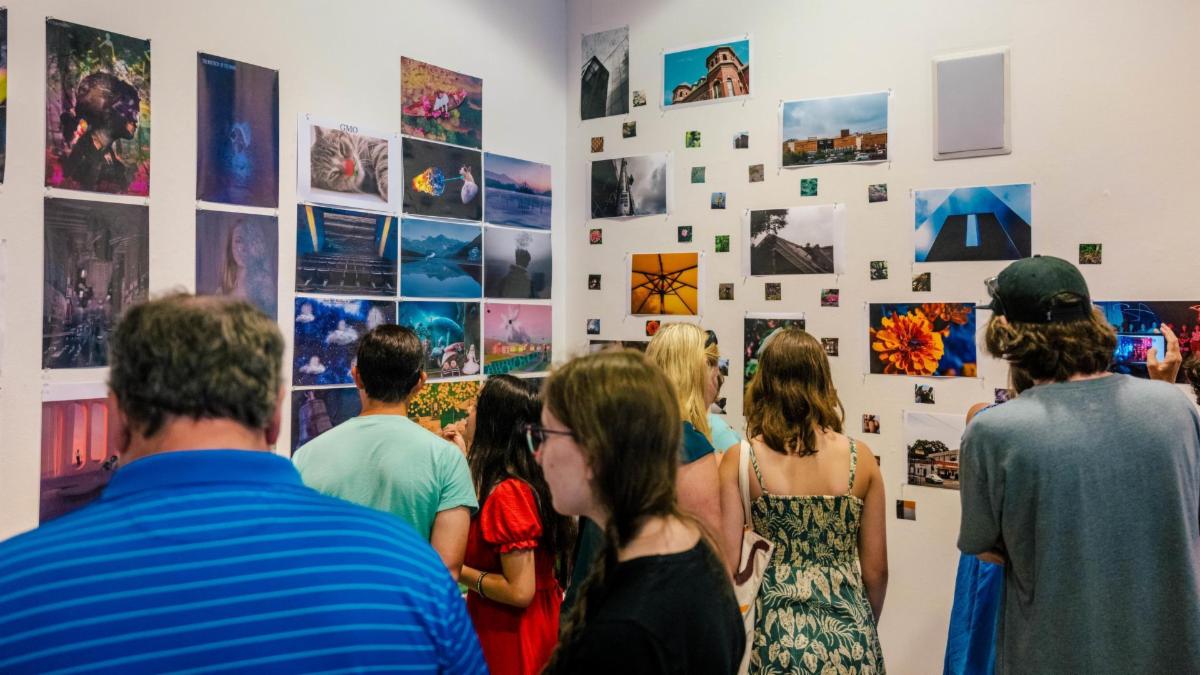
The week-long, residential program allows for exploration of a variety of creative visual art experiences, including drawing, painting, printmaking, sculpture, photography, graphic design, animation, and filmmaking—a new element this year through a collaboration between the School of Art and the College of Arts and Sciences’ Department of Media Studies.
Organized by Dr. Maria Lim, Professor of Art Education, the camp began in 2014 with two instructors, four classes, and about 15 students. By year five, it had grown to its maximum capacity:
“It grew really quickly and has become well known throughout the region,” reflects Dr. Lim. “One-third of our students are from outside of North Carolina. Students and parents spread the word, and an estimated 20% of campers return each year until they graduate. Sometimes they want to come back as volunteers after they go to college. They really love our camp and become members of the camp family. Some of the campers decide to come to the School of Art, but many of them come to UNCG to study in other areas.”
Participants work with faculty from the School of Art, art education staff, and visiting artists; engage with the creative community; and access extensive professional art resources on campus.
Dr. Lim says the camp provides valuable professional lessons for art education students:
“Our education interns use the camp as their service-learning course. They assist faculty and learn classroom management and pedagogical framework. They’ll gain a lot of understanding of high school students, culture, and the camp itself. It’s a professional development opportunity for the students, and we all learn from each other.”
Dr. Lim shares her goals for the students:
“First, my hope is for them to get a taste life on a college campus. So many students don’t feel like they have a reason to go to college. They love art, but they don’t see a purpose in higher education. I think the camp helps them gain insights about why they need to go to college as they pursue their career in art.
“Second, I want them to learn skills and techniques, but more importantly, how to think critically and how to deliver that in art and artistic expressions. So often, the K–12 classroom is very structured with expectations. But a college studio exploration is totally different. We help students learn that nothing is impossible here. It’s their own journey and we will help them along the way.
“Third, I just want them to have fun. Art and studying art are fun things, and they make our lives fun and exciting.”
In addition to art classes, the camp offers enrichment activities, including artist talks, visits to Art Galleries, and a career seminar on the arts. Students also produce portfolio-quality artwork for a final exhibition, a tradition that Dr. Lim really enjoys:
“It’s vivid and activating. We put on a very professional show in the Gatewood Gallery for family members at the end of the week, and the campers choose which of their pieces will be in it. It’s a good way for family members to see their work, but also a chance for students to see work from the other classes.
“I really love to love to see those faces during the week and am excited to see their final show. I like to see the campers really develop their character, their artistic character, and their personal character and watching them find this sense of belonging and connectedness and learning to value who they are as artists. As an art educator and as a parent, that’s one of the best things for me.”
The 2026 Summer Arts and Design Intensive runs July 12th–17th. The application window opens on February 20th.
Uprooted Jazz Dance Workshop: Teaching the TEachers
The School of Dance is hosting an Uprooted Jazz Dance Workshop designed specifically for dance educators looking to refine their teaching methodologies, expand their movement vocabulary, and deepen their understanding of jazz dance pedagogy.

Led by renowned industry professionals and members of the Uprooted Educational Team, the Uprooted workshops are directly related to the documentary film Uprooted: The Journey of Jazz Dance, serving as an educational extension that promotes the film’s core message of exploring the history, lineage, and future of jazz dance.
Professor Robin Gee is co-producer of the film, with LDR Creative, and an Uprooted instructor:
“Bringing the Uprooted Jazz Dance Workshop for Educators to UNCG is a powerful opportunity to activate our campus as a site of artistic exchange, cultural dialogue, and professional-level training. Uprooted connects our students to nationally recognized artists and practices rooted in jazz dance traditions while foregrounding innovation, equity, and community—values that strongly align with the School of Dance’s mission.
Professor Gee notes the advantages of having the Uprooted program on campus:
“For our students, it offers immersive exposure to diverse methodologies and career pathways; for the broader Greensboro community, it strengthens UNCG’s role as a hub for dance education and creative leadership; and for the School of Dance as a whole, it reinforces our commitment to hosting impactful programs that bridge academic study, professional practice, and community engagement.”
The program offers a comprehensive exploration of musicality, movement quality, and progressive lesson planning, equipping instructors with fresh ideas and practical tools to enhance their classes. Dance educators wishing to earn continuing education credits will receive a certificate of completion equal to thirty contact hours for their participation in the workshop.
The Uprooted Jazz Dance Workshop for Educators at UNCG runs July 16th–19th.
Story by Terri W Relos
Photo credits: Sean Norona