


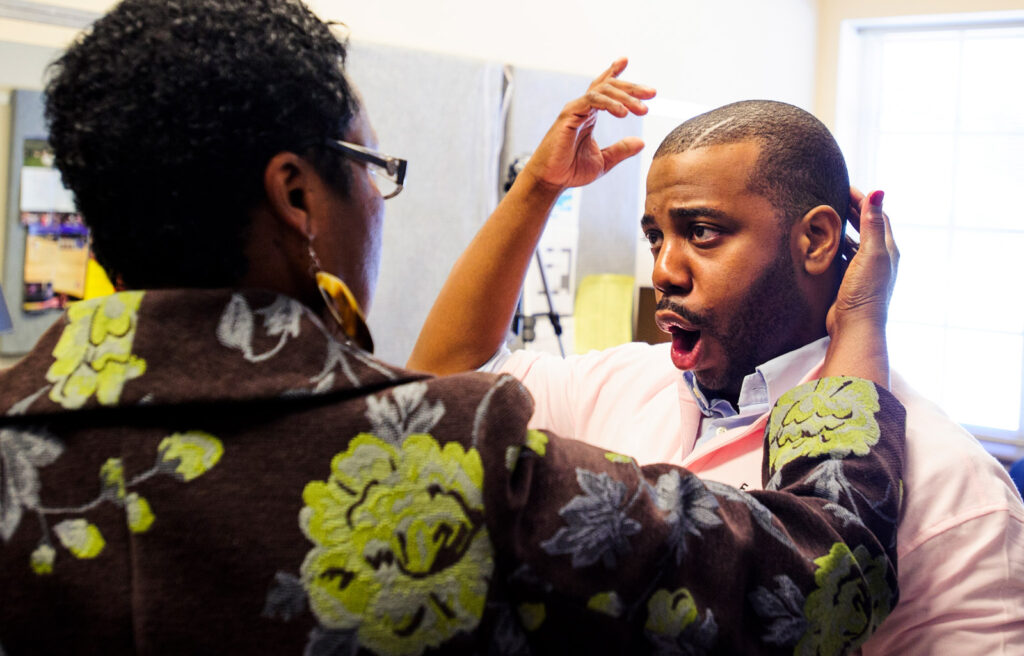
Wellness is essential for one’s academics, relationships, and artistic success. The School of Music cares about the health and well-being of its students, faculty, and staff. We encourage everyone to consider wellness within the context of musical practice and to develop a lifelong wellness plan.
This page includes resources on mental, neuromusculoskeletal, hearing, and vocal health for musicians. The materials provided are informational in nature and are intended to provide a broad introduction to the occupational health concerns of student musicians. This information is not intended to substitute for the expertise of healthcare professionals. Students, faculty, and staff should seek professional advice about their specific health and well-being concerns.
Personal Safety
Wellness Course Offerings
Injury Prevention and Fitness
Musicians execute a wide array of skills that can be physically and emotionally challenging, with our bodies serving as our primary instruments. Students should consult regularly with their primary applied studio teachers about how to practice and perform effectively and safely. The goal is increasing self-awareness and preventing injury before it occurs. If you are experiencing pain, immediately consult with your primary applied studio teacher and appropriate healthcare professionals.
Vocal health is addressed in the following School of Music courses:
MUP 428/627/727 Principles of Vocal Pedagogy (3 cr.)
Teaching process as applied to singing. Includes historical development and an examination and comparison of concepts and approaches past and present. Prerequisites: Senior standing as a voice major or principal or permission of instructor .
MUE 462 Singing Voice in Classrooms and Ensembles (2 cr.)
Provides an overview of vocal anatomy/function, care of the voice, vocal repertoire, teaching strategies, and other specialized topics related to singing instruction in music classrooms and choral settings.
Prerequisites: MUE 261 Foundations of Teaching for Musical Understanding
MUP 728 Advanced Vocal Pedagogy (3 cr.)
Practical application of proven pedagogical techniques in a supervised teaching situation.
Prerequisites: MUP 627 Principles of Vocal Pedagogy
Vocal health is further addressed below:
- Private Voice Lessons and Choral Ensembles also address aspects of vocal health.
- School of Music voice studios hold master classes and clinics on topics related to best practices and healthy habits for vocal health.
- School of Music Voice faculty have completed coursework in Vocology and/or Vocal Pedagogy
- While we no longer offer diagnostic screenings through our campus speech clinic, students who need vocal therapy and voice evaluations are referred to the voice care centers of Wake Forest University Baptist Hospital and Duke University Hospital.
The School of Music and various studios offer programs for students focused on building and maintaining healthy practices, increasing personal wellness, and developing strategies for reducing and managing stress.
Therapy dogs often visit the University Libraries during finals week in an effort to reduce stress on campus.

The Leonard J. Kaplan Center for Wellness at UNC Greensboro has a wealth of wellness resources and activities for students.
The Kaplan Center provides 216,000-square-feet of recreation space that includes 23,000 sq. ft. weight/cardio space, lap and leisures pools, multi-activity courts, and more. The center sponsors over 17 sports clubs with more than 700 student participants and over 50 adventure trips and events including backpacking, bouldering, canoeing, caving, hiking, rock climbing, coastal kayaking, stand up paddleboarding, whitewater kayaking, and rafting.
The facilities include:
- 23,000 square feet of. weight/cardio space
- 3-Court Multi-Purpose Gym
- 2-Court Multi-Purpose Gym
- 2-Court Multi-Activity Court (MAC)
- Group Fitness Studios
- Spartan Terrace
- 54 foot Climbing Wall
- Bouldering Wall
- Inclusive Dry Sauna
- Natatorium (Competition and Activity Pools)
- Outdoor Pool Patio
- 2 Racquetball Courts
- Mat Room
- 3-Lane Indoor Running Track
- Spiro’s Lounge (Table Tennis, Billiards, Shuffleboard)
- Meeting Spaces
- Locker Rooms (Inclusive, Men’s, and Women’s)
- Zen Zone (Nap Pods and Hydromassage Chairs)
The Department of Recreation and Wellness offers a wide variety of in-person and on-demand classes to students and members. Classes range from strength and conditioning, flexibility, cardio dance to mental wellness formats.
Personal Trainers are able to design customized workout plans, provide ongoing motivation and support, and keep you accountable. UNCG Personal Trainers are dedicated to helping you achieve your specific fitness goals.
Hearing Protection Program
Body and Mind Wellness
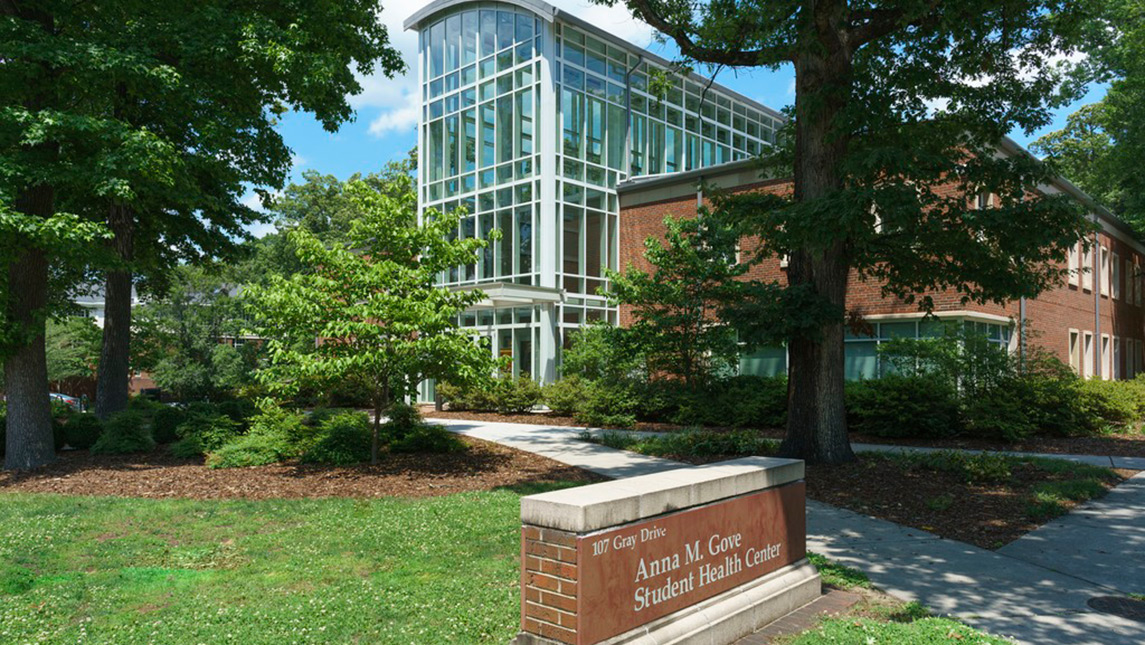
Student Health Services provides collaborative health care designed to empower students to develop lifelong skills that enhance their physical, psychological and wellness status in an inclusive and affirming environment and promote student success and retention. Services include:
- Primary Medical Care
- Sports Medicine
- GYN Services
- Laboratory and X-Ray
- Immunizations
- Massage Therapy
- On-Campus Pharmacy
- Mental Health and Well-Being
Location
Student Health Services
Gove Student Health Center
107 Gray Drive, Greensboro, NC 27412
336.334.5340
Monday through Friday: 8:00 am – 5:00 pm (Counseling & Psychological Services and Medical Clinic)
Monday through Friday: 8:30 am – 5:00 pm (Pharmacy)
Weekends: Closed
Counseling & Psychological Services offers a wide range of services designed to support the personal growth, academic success, and emotional health of currently enrolled UNCG students, as well as services and programs to promote positive well-being throughout the university community. The services include group therapy, support groups, individual therapy, workshops, crisis intervention, psychiatry services, consultation, and outreach activities. They work collaboratively with students to identify goals and determine the most effective treatment options.
Location
Counseling & Psychological Services Center
2nd Floor, Gove Student Health Center
107 Gray Drive, Greensboro, NC 27412
336.334.5874
Monday through Friday: 8:00 am – 5:00 pm
Weekends: Closed
The Campus Violence Response Center’s (CVRC) mission is to create a single point of access for any UNCG community member who has experienced violence. Their team of confidential staff understands the impact of violence, including sexual assault, intimate partner violence, stalking, sexual or gender-based harassment, and all other forms of campus violence. The CVRC provides survivors with affirming, empowering, and confidential services. Services include victim advocacy, counseling (trauma specialty), and groups/workshops.
Location
Campus Violence Response Center
Ground Floor, Gove Student Health Center
107 Gray Drive, Greensboro, NC 27412
336.334.9839
Responding to Students in Distress Quick Reference Guide
- Life Threatening Situation
- UNCG Police (24 hours) – 336.334.4444
- UNCG Police (Text) – 336.447.3898
- Non-Emergency
- UNCG Police (24 hours) – 336.334.5963
- Dean of Students Office – 336.334.5514
- Classroom Management Concerns
- Undergraduate Teaching & Learning Commons – 336.334.5980
- Disruptive Behavior in the Classroom Policy
- Contact your Dept. Chair or Academic Dean
- Dean of Students Office – 336.334.5514
- Student Code of Conduct or Academic Integrity Policy
- Office of Student Rights & Responsibilities – 336.334.4640
- Residence Life Resource
- Housing & Residence Life – 336.334.5636
- Health & Mental Health Resources
- Counseling & PsychologicalServices –336.334.5874
- Student Health Services – 336.334.5340
- Campus Violence Response Center – 336.334.9839
- Moses Cone Behavioral Health Center (24 hours) – 336.832.9700
- National Suicide Hotline:
- 1-800-SUICIDE (784-2433) or 1-800-273-TALK (273-8255)
- Administrative Resources
- Dean of Students Office (Multiple Student Issues) – 336.334.5514
- Graduate School – 336.334.5596
- International Programs Center – 336.334.5404