Why are so many teachers walking away from the classroom—and what would it take to make them stay?
That’s the question that Peter Duffy (’07 MFA Directing, Concentration in Theatre for Young Audiences) is asking with his play ReformED, which is the season opener for the UNCG School of Theatre on September 12th.
Duffy heads the Master of Arts in Teaching Program in Theatre Education at the University of South Carolina. He says he’s seen a lot of change since beginning his career in higher ed in 2008.
“It wasn’t just the increase in standardized testing, but the scripting of how teachers need to present information. That, and a lot of teachers’ autonomy and creativity was starting to go away with it. What I think, and what research supports, is an over reliance on standardized testing and an under reliance on teacher autonomy, professional judgement and creativity.
“We saw many teachers starting to leave education and then came those large teacher protests starting in West Virginia, California, Arizona, and New Mexico. In 2019, about 10,000 South Carolina teachers marched on the statehouse and we realized we were at an inflection point and wondering what was going to be next.”
For Duffy, the value of education was instilled early. As the son of an elementary school principal, Duffy became an educator, too. He taught for ten years at a public high school in rural Maine where he found himself also leading the theatre program. When he decided to pursue a graduate degree, he found his way to UNC Greensboro.
“I saw all these incredible connections between performance and design and education. I was looking for a graduate program that would give me the ability to strengthen my understanding of performance and directing, and also had a strong commitment to education, and I found that at UNCG.”
While in the School of Theatre, he also found his wife, Patti Walker (’06 MFA Acting) After graduation, they moved to New York City where Duffy was the education director for a theater company, the Irondale Ensemble Project. After about a year, the appointment at the University of South Carolina happened.
“I head up the master’s program in arts and teaching in theater education. And so, I work with people who want to become drama teachers. I feel strongly that my training and preparation at UNCG has a lot to do with my ability to have done this job for the last 17 years.”
Duffy feels it’s not just his job, but an ethical obligation to prepare his students in the best way possible.
“It’s not enough to love children, you know, to love working with kids. That’s the floor, not the ceiling. Don’t get me wrong, teaching is an incredibly fulfilling, rewarding, and important profession. But if all we’re doing in teacher education is filling our future teachers’ heads with what now seems to be a bygone narrative of what teaching was, then we’re not adequately preparing them.
“I started to look for ways to help them understand that they’d be dedicating a lot of time and personal financial resources to develop their craft as educators. I wanted them to know what they’d be walking into and how to take care of themselves and their future students.”
That led to a seven-year research project in which Duffy reached out to about a thousand teachers with a 50-question survey. He received roughly 800 responses from teachers across the country and in every discipline and grade level, most of them in public education. He then conducted about 120 interviews. He put the stories he’d gathered through a qualitative research process and found some common themes.
“The largest theme was lack of administrative support. Believe me, I’m not hating on principals. It’s just that there’s incredible downward pressure. The principals must meet certain benchmarks so there’s this push on the principals that is then placed on teachers and then the students. And there’s not as much time to deal with behavior issues or curriculum development. There’s not enough time to establish community or offer teachers professional development.”
Duffy used his survey and the interviews to write ReformED.
“Each of the scenes in the play reflect a major theme that came from the research. The audience is going to hear real teacher voices because many of the lines are verbatim text from the teachers’ responses.
“I wish I had counted how many times teachers or former teachers were crying during their interviews, saying that they loved teaching, they loved their kids, but they just couldn’t do it anymore. It was taking too much out of their own soul, their own life, their own well-being, their own physical and mental health, and they just, they just couldn’t do it anymore.”
Duffy stresses that his play is not to dissuade anyone from teaching. Rather, he wants to shine a light on what’s happening in schools and to spark change.
“The thing is that we don’t have a crisis in education, right? We don’t have a crisis in the number of people who want to be teachers. We have a crisis in the conditions in which people have to work in order to become teachers—the lack of respect for teachers and student behavior issues that are becoming harder to deal with. Hopefully this play is a way for us to have a conversation about that, about the value of education, and about the need to have high-quality teachers in the classroom.”
ReformED was first staged at the University of South Carolina in 2019 and most recently in Melbourne, Australia in 2023. Duffy says the reactions have been visceral.
“Teachers who saw it asked, ‘What were you doing inside my head?’ They wanted to know how I knew their story so well. They said they’d never felt so seen.
“Other people were asking ‘What’s the happy ending?’ My answer to that is that I’m reflecting what teachers told me. I didn’t cherry pick stories or pull out the ones I thought were most dramatic.
“We all want to know how to fix education. What’s the secret? It won’t come from just inside the educational system, and it won’t come from outside mandates. The fix comes when we come together around what we want the experience of children to be in schools. If we work together to reimagine what’s possible for public schooling, we will create meaningful change. Often educational reform is performative, and nothing ever really changes. This play looks at the consequences of reform upon reform and the pressures they create. And since education is supposed to be a public good, it’s up to our communities to figure out what’s next.”
Duffy says ReformED is an act of deep respect for all educators—teachers, principals, and school board members. And, he says it offers hope.
“This play is an act of optimism. I think talking about the things that are challenging and the things that we need to address is an act of hope, right? That we can do something better.
“Do we treat a kid’s brain like a 5-gallon bucket and pour in 10 gallons of water and call it good? Or do we work with children developmentally building on where they are? We don’t have to teach a human brain how to learn. We have to learn how to help a child fill their brain with awe, wonder, and curiosity. We need teachers who understand how to educate in developmentally appropriate ways for individual learners, to make learning come alive and personally relevant.
Those are the things that will help save education.”
UNCG Theatre presents
ReformED by Peter Duffy
Pam and David Sprinkle Theatre
September 12th–14th
Story by Terri W Relos
Video and images provided by Peter Duffy
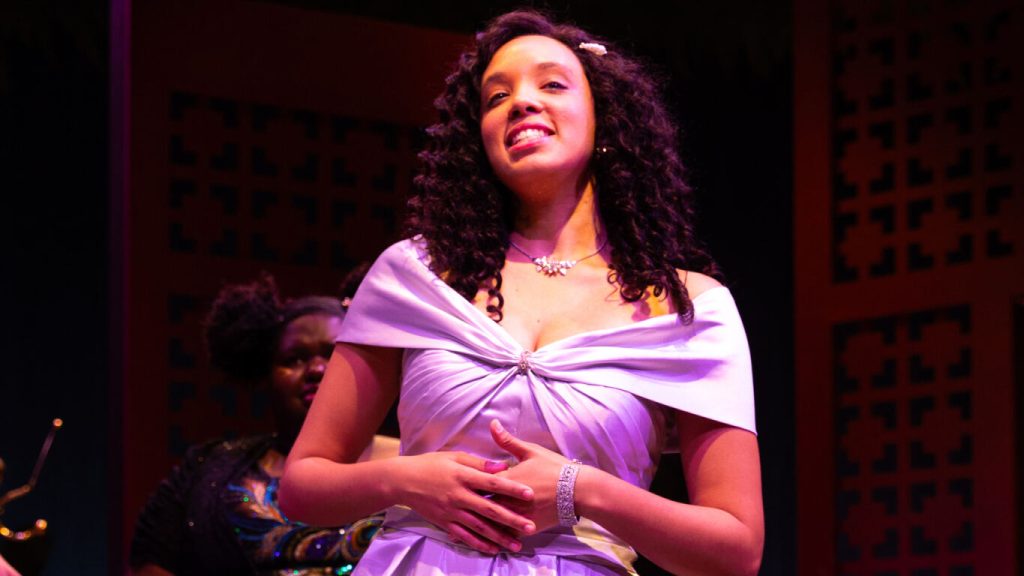
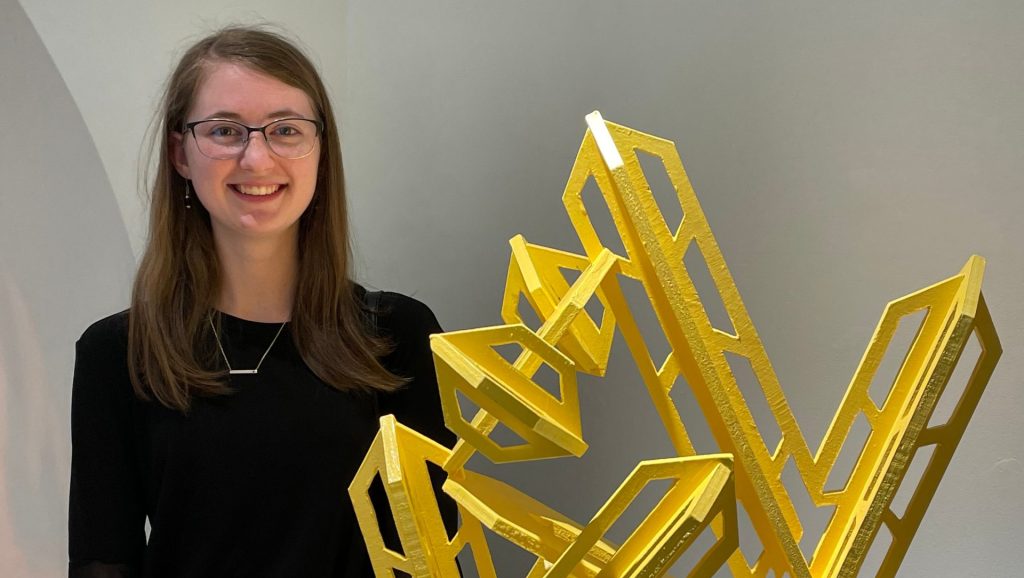
Scenes from the University of South Carolina production of ReformED